Threat Intelligence
Overview
Threat Intelligence is a continual process used to understand the threats faced by an organization. It is focused on analyzing evidence-based knowledge about an existing or emerging hazard to our asset.
Characteristics of Good Threat Intelligence
Known as CART, effective threat intelligence has four key traits:
| Factor | Description |
|---|---|
| Confidence Levels |
|
| Accuracy |
|
| Relevancy |
|
| Timeliness |
|
Threat Intelligence Lifecycle
Threat intelligence follows a continuous cycle to collect, analyze, and share information about threats.
-
Requirements
- Define goals for the intelligence operation
- Identify threats or adversaries to track
- Set measurable objectives, like reporting new attack techniques
-
Collection
- Gather data from threat feeds, internal logs, and forums
- Capture indicators like IPs, domains, and file hashes
- Use automated tools or manual methods to collect information
-
Processing
- Convert raw data into structured formats like spreadsheets or STIX
- Remove duplicates and irrelevant information
- Enrich data with additional context for easier analysis
-
Analysis
- Correlate indicators with attacker behaviors
- Use analytics tools, sandboxing, and lookup services
- Identify patterns and turn raw data into actionable intelligence
-
Dissemination
- Share intelligence with SOC and incident response teams
- Update security controls like IDS, IPS, and firewalls
- Provide actionable recommendations to prevent attacks
-
Feedback
- Review results and effectiveness with all teams
- Identify gaps or improvements for future operations
- Adjust requirements and collection strategies based on lessons learned
Types of intelligence
Open-Source
Data that is available to use without subscription, which may include threat feeds similar to the commercial providers and may contain reputation lists and malware signature databases
- US-CERT
- UK’s NCSC
- AT&T Security (previously Alienvault OTX)
- MISP
- VirusTotal
- Spamhaus
- SANS ISC Suspicious Domains
Proprietary
Threat intelligence is very widely provided as a commercial service offering, where access to updates and research is subject to a subscription fee
- Some of these are repackaged information.
- Not nearly as useful.
Companies that provide proprietary threat intelligence feeds:
- FireEye
- McAfee
- Symantec
Closed-Source
Data that is derived from the provider's own research and analysis efforts, such as data from honeynets that they operate, plus information mined from its customers' systems, suitably anonymized
- Good example is Fireeye
Information Sharing Organizations
These are alliances that are formed to share threat intelligence among its members.
- Centers
- Organizations
Industries:
- Finance
- Healthcare
- Energy
Open-Source Intelligence (OSINT)
Methods of obtaining information about a person or organization through public records, websites, and social media.
Dark Web
The Dark Web is a part of the internet that is intentionally hidden and requires special software like Tor to access.
- A segment of the Deep Web, often associated with illegal or illicit activities.
- Often monitored by law enforcement due to its association with cybercrime.
- Contents are not indexed by search engine like Google
- Uses Tor network, which is sits over standard internet protocol.
- Encrypted anonymous connections
How it works:
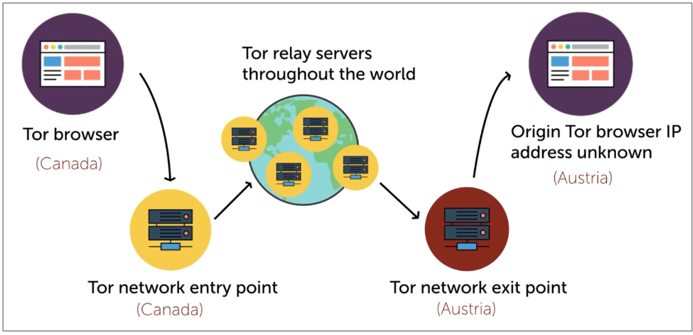
Implicit and Explicit Knowledge
All of the threat feeds mentioned previously as intelligence sources are considered explicit knowledge, but explicit knowledge comes from years of experience.
Automated Indicator Sharing
Uses a specialized format called Structured Threat Information Expression (STiX) to package threat intelligence information.
- Exchange of cybersecurity intelligence between entities
- Uses Trusted Automated Exchange of Intelligence Information (TAXII) to transmit the packaged information
- TAXII is like an RSS feed
- Normally built-in on security monitoring tools
Collection Management Framework (CMF)
A Collection Management Framework (CMF) is a structured way to track and manage all potential sources of data that can help incident responders and investigators.
- Organize collection from multiple sources
- Ensure data is accurate, complete, and ready for analysis
- Speeds up detection and response
- Avoids redundant efforts and wasted resources
It is usually maintained as a living document or spreadsheet listing digital assets (computers, network devices, PLCs, loggers) that generate logs or other forensic information.
Log Sources
Common sources of intelligence for investigations:
- Logs
- Network telemetry
- Threat feeds
- OSINT
Collection Methods
Collection methods define how data is gathered from sources efficiently.
- Automated agents
- APIs
- Manual collection
Processing
Processing ensures collected data is meaningful and actionable for analysts.
-
Filtering
- Remove irrelevant or duplicate data
- Focus on actionable indicators only
-
Enrichment
- Add context to raw data geolocation, IOC reputation)
- Correlate with other sources for better insights
-
Prioritization
- Rank data based on risk, relevance, or threat impact
- Focus on the most critical information first