Querying
Creating a Legacy Notebook
Legacy notebooks will be replaced by Workspace in the future, but they are still available for use.
Before you can create a notebook, you will need to create a database, schema, and warehouse in Snowflake. See Using Snowflake for instructions on how to do this.
Oncen you have those set up, you can create a legacy notebook:
-
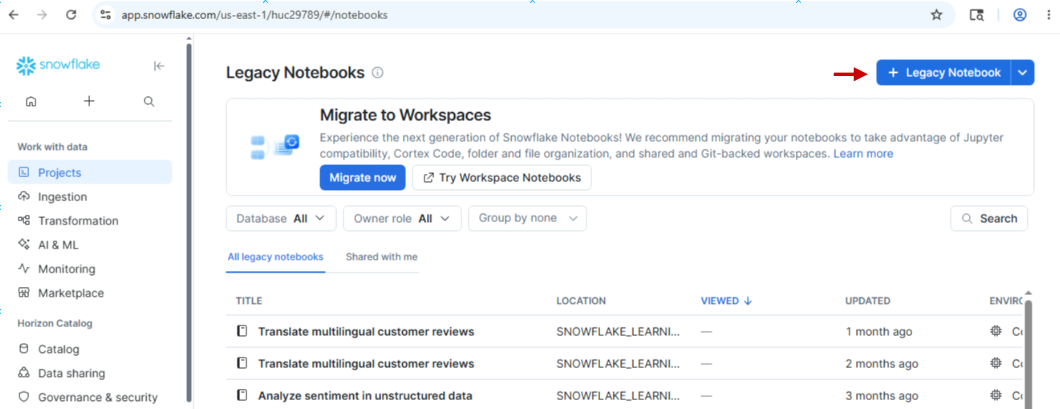
Go to Projects ➜ Legacy Notebooks ➜ + Legacy Notebooks.
-
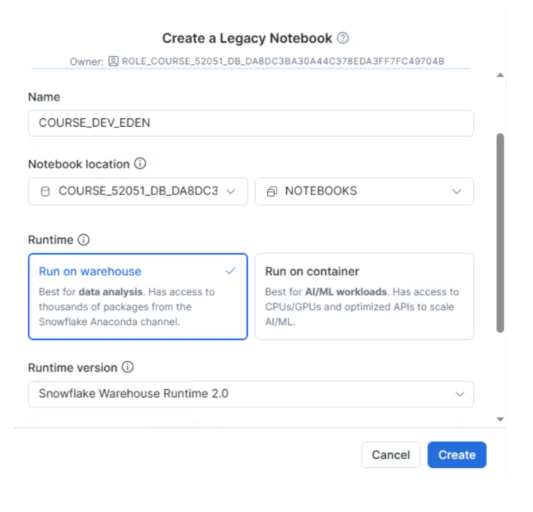
Provide a name for the notebook and select the notebook location and schema.
Features in Snowsight
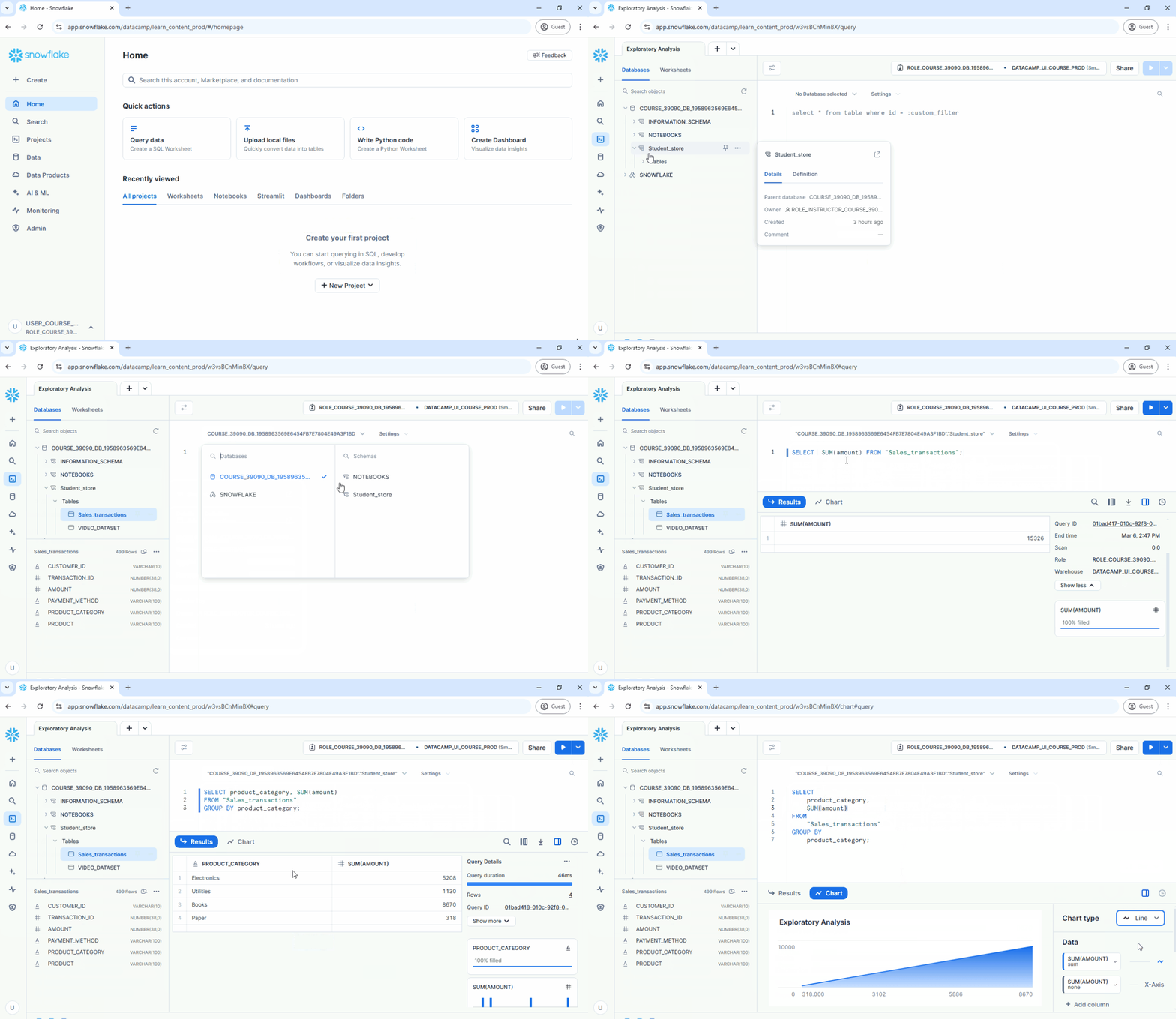
Snowsight provides several features to help interact with data.
| Feature | Description |
|---|---|
| Visualize Data | Automatically converts query results into charts to help quickly identify patterns and trends |
| Ask Copilot | Lets you ask questions about your data in natural language and explore results without writing full SQL |
| Query Shortcuts | Keyboard shortcuts like Cmd + Shift + Enter help run queries faster and improve workflow speed |
| Format Query | Automatically formats SQL queries to improve readability and make complex queries easier to understand |
Snowsight ALSO has a "Code Versions" feature to track the queries you’ve run over time.
- Every time you run a query, Snowsight saves the version and time.
- You can go back to previous versions of your queries if needed.
Executing a Query
In the SQL editor, you can write and execute queries against your Snowflake data.
In this example, we query the in_app_purchases table in the product database.
SELECT * FROM product.in_app_purchases;
After running the query, the results show below the query editor.
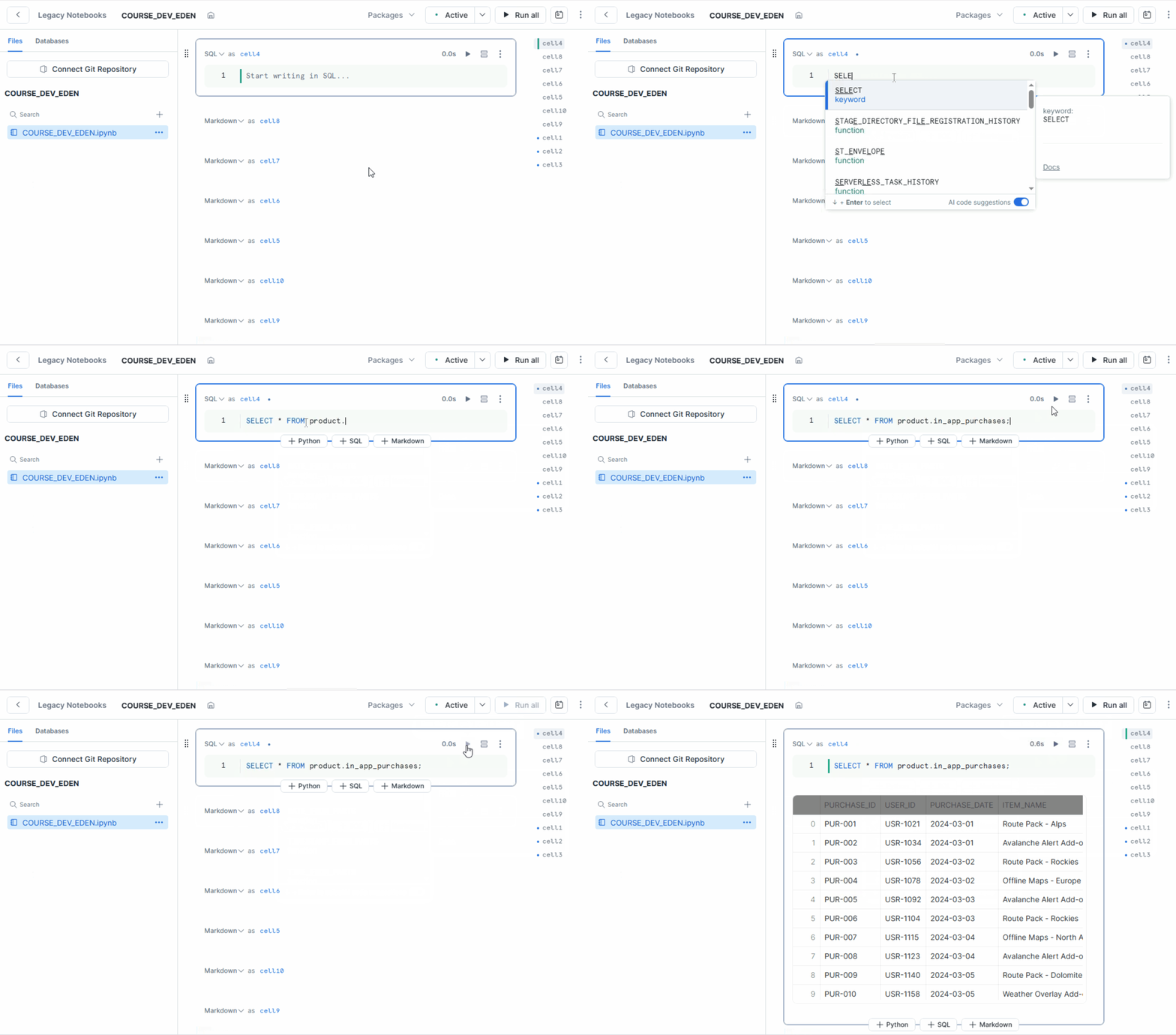
You can also download the results as a CSV or TSV file using the download icon. Click Chart to see the visualized data.
To view all the queries ran, click Code Versions.