Storage Security
This is not an exhaustive documentation of all the existing Azure Services. These are summarized notes for the Azure Certifications.
To see the complete documentation, please go to: Azure documentation
Overview
These security options collectively enhance the protection, management, and monitoring of data stored in Azure Storage. Each option addresses specific aspects of security, access control, and logging for a comprehensive storage security strategy.
Azure Storage Service Encryption
Automatically encrypts data in Azure Storage to meet security and compliance requirements.
- Enabled by default when creating a new storage account; cannot be disabled.
- Uses 256-bit AES encryption.
- Supported on Standard and premium storage accounts.
- No impact on Azure Storage performance.
- No additional cost for Azure Storage encryption.
- Resources Encrypted: Blobs, disks, files, queues, and tables, including metadata.
For more information: Azure Storage Service Encryption
Shared Access Signatures (SAS)
A Shared Access Signatures (SAS) is a URL token that gives temporary, controlled access to Azure Storage resources. It defines who can do what, and for how long, without exposing your account key.
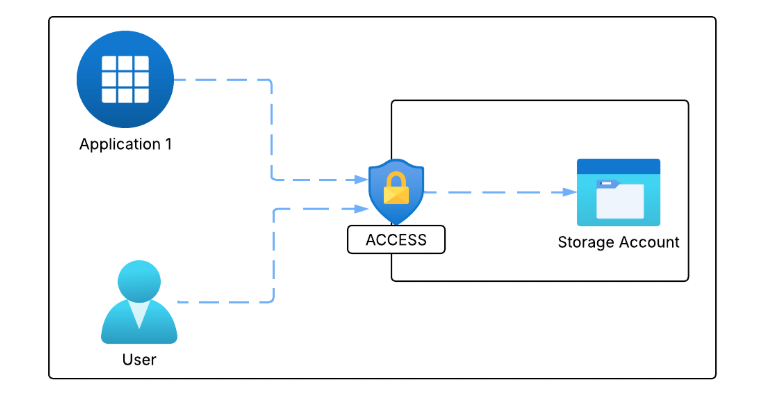
Creating a SAS Token
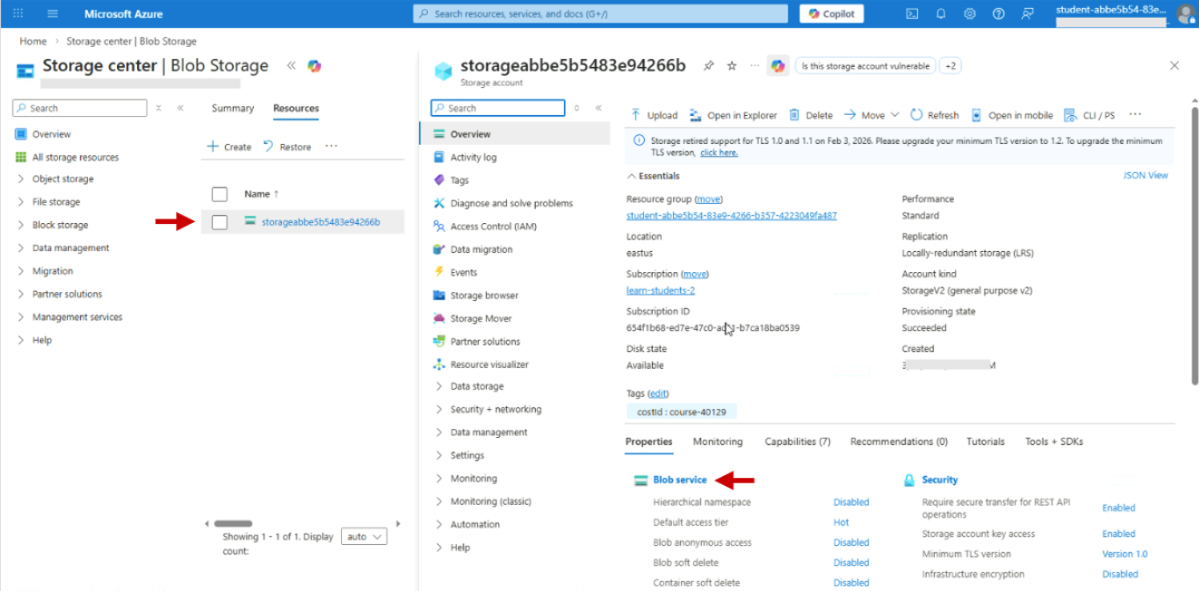
To create a SAS token, navigate to Storage accounts and select the desired storage account. Under Properties, click Blob service.
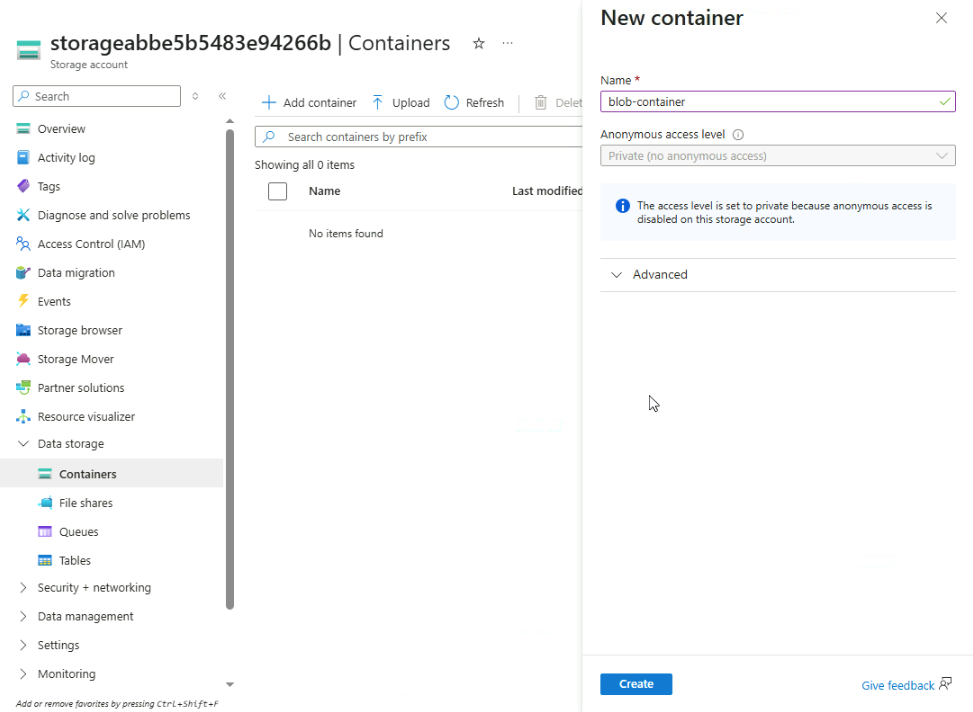
Click Add container and provide a name. Click Create.
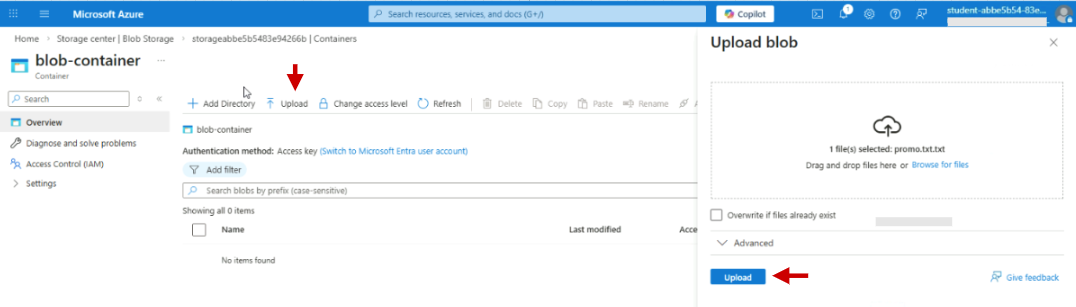
After its created, open the new container. You can upload file heres by clicking Upload.
To share this file securely, you can use SAS tokens. Click the three dots on the right hand side and select Generate SAS.
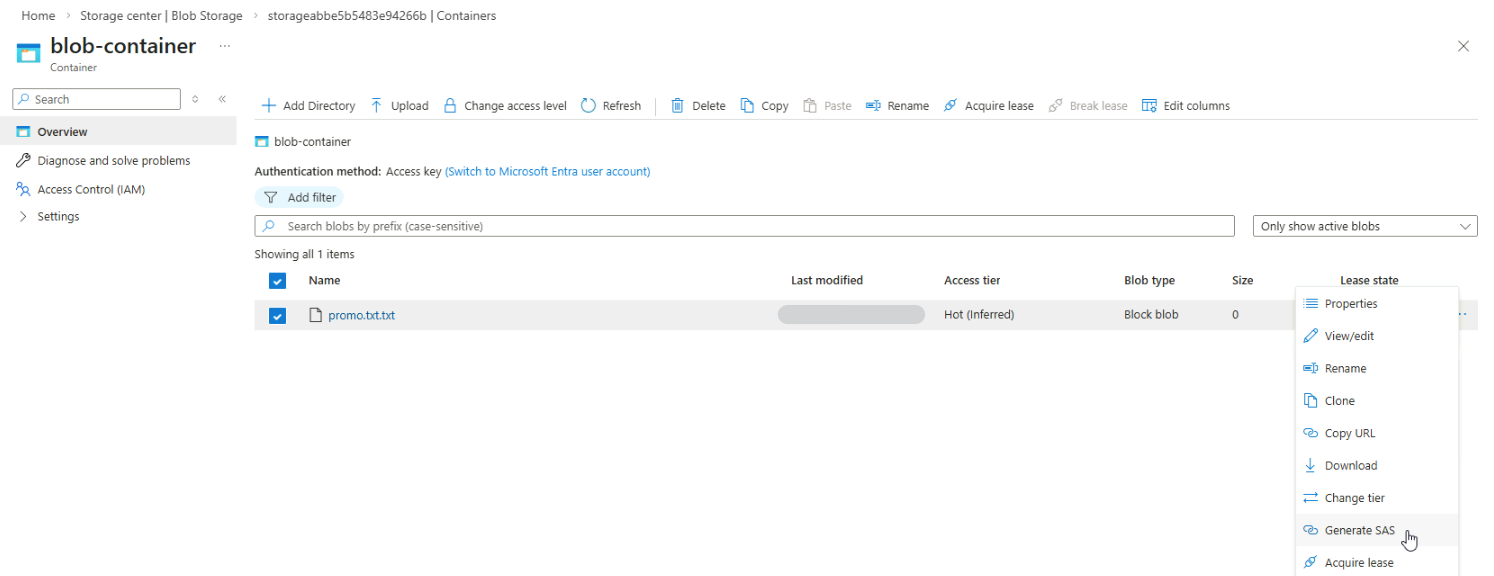
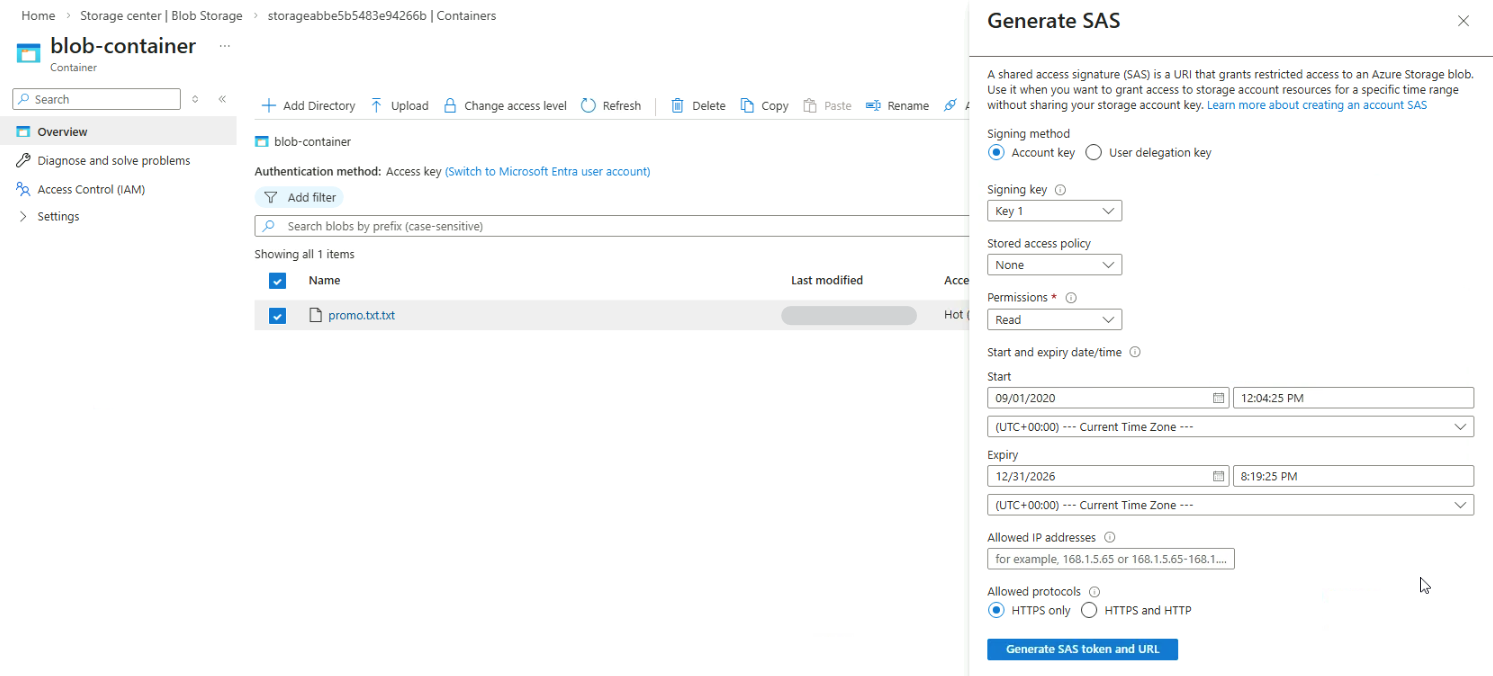
You can modify settings such as the signing method, stored access policy, and expiration time. Once configured, click Generate SAS token and URL.
It will return the SAS token and URL below the Generate SAS token and URL button.
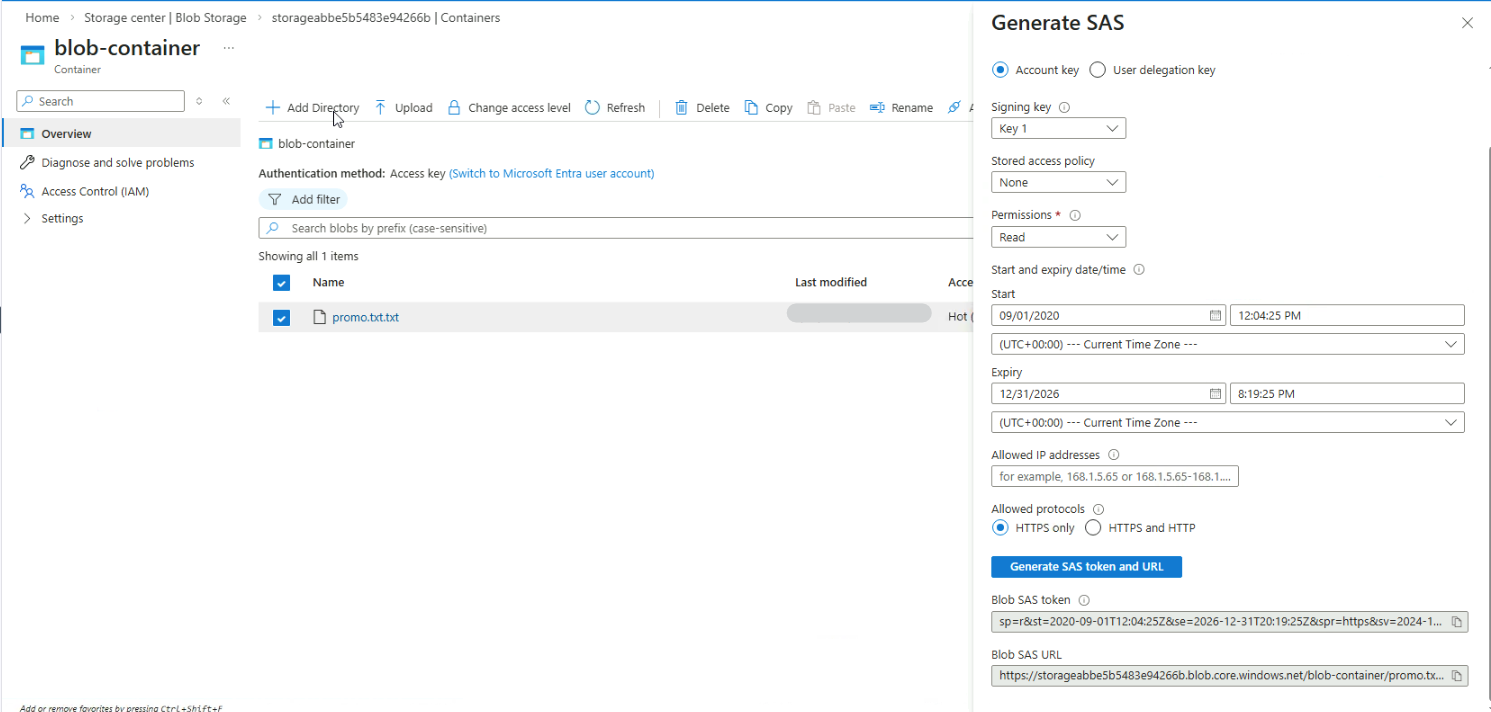
You can now use this URL to view or download the resource without signing in, while keeping your main account keys secure.
Types of SAS
There are three SAS types with different scopes and security levels:
| SAS type | Credentials used | How it works | Example |
|---|---|---|---|
| User Delegation SAS | Microsoft Entra credentials | Grants access to specific blobs or Data Lake Storage; tied to a user | HR app shares payroll reports securely with an external auditor |
| Service SAS | Storage account key | Grants access to a single service like blobs, queues, or files | A ticket valid for accessing only the blob service |
| Account SAS | Account key | Grants access across multiple services and allows service-level operations | Master pass giving access to multiple storage services at once |
User Delegation SAS is the most secure because it avoids storing keys and is tied to a specific user identity.
How SAS works
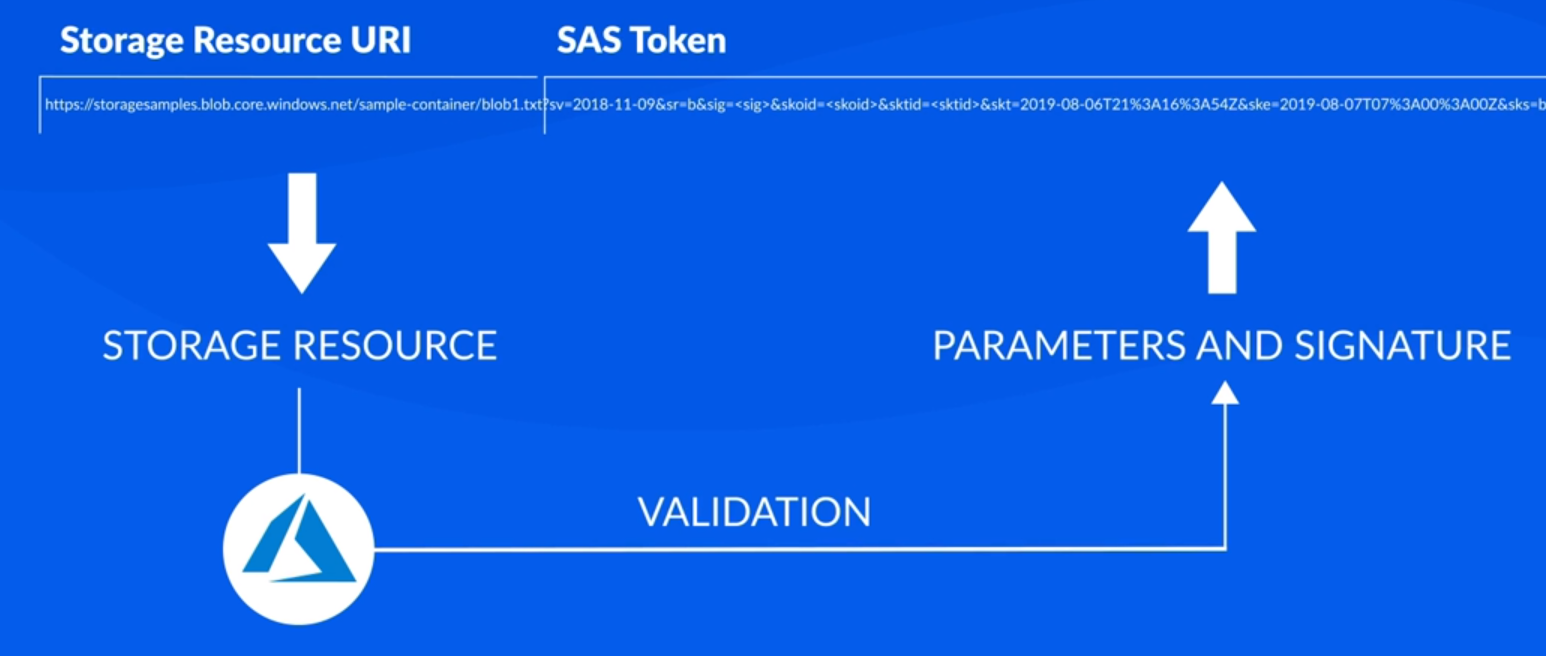
Shared Access Signatures (SAS) works by using a signed URI that tells Azure what actions are allowed and for how long.
- SAS is a signed URI with a special token and query parameters, including a signature
- SAS URI is sent to Azure Storage as part of a request
- Azure checks the token and signature for validity
- Unauthorized requests are declined
For example, a web app needs to share payroll reports with an external auditor:
- Uses User Delegation SAS to grant temporary access
- Auditor can only view the specific payroll reports they need
- Access automatically expires after a set time
- SAS is authenticated with PeopleSphere’s Azure credentials
This ensures sensitive account keys are never exposed while granting precise, temporary access.
SAS Structure
A SAS starts with a URI to the storage resource and appends a SAS token. The token contains key-value pairs defining permissions, time limits, and resource type.

Token components:
| Component | Description |
|---|---|
sp | Permissions granted, such as read or write |
st / se | Start time (st) and expiry time (se) for the SAS |
spr | Allowed protocol, like HTTPS or HTTP |
sr | Resource type, e.g., "b" for blob |
sv | Storage API version used |
sig | Cryptographic signature that verifies the request |
Best Practices
- Always use HTTPS to prevent token interception
- Prefer User Delegation SAS for better security
- Keep expiration times short to minimize risk if tokens are leaked
- Only grant necessary permissions
- If unsure, avoid SAS and use a secure backend service
Storage Account Keys
When you create a storage account, Azure generates two 512-bit keys which you can use to authorize access to data that resides in your storage account via Shared Key authorization.
- Use Azure Key Vault to manage, rotate, and regenerate the keys
- Regularly rotate and regenerate keys
- Key rotations can be performed without interrupting the applications that use them
- Storage accoun access are essentially root passwords; protect them by not distributing, saving in plain text, or hard coding in apps.
Azure Storage Analytics
Performs logging and provides metrics data for storage accounts.
- Ideal for tracing storage requests, analyzing usage trends, diagnosing storage account issues.
- Needs to be enabled for each service to monitor storage requests and analyze usage trends.
- 20TB limit for stored data, independent of the total storage account limit.
For more information: Azure Storage Analytics