13 posts tagged with "books"

books tag description

View All Tags

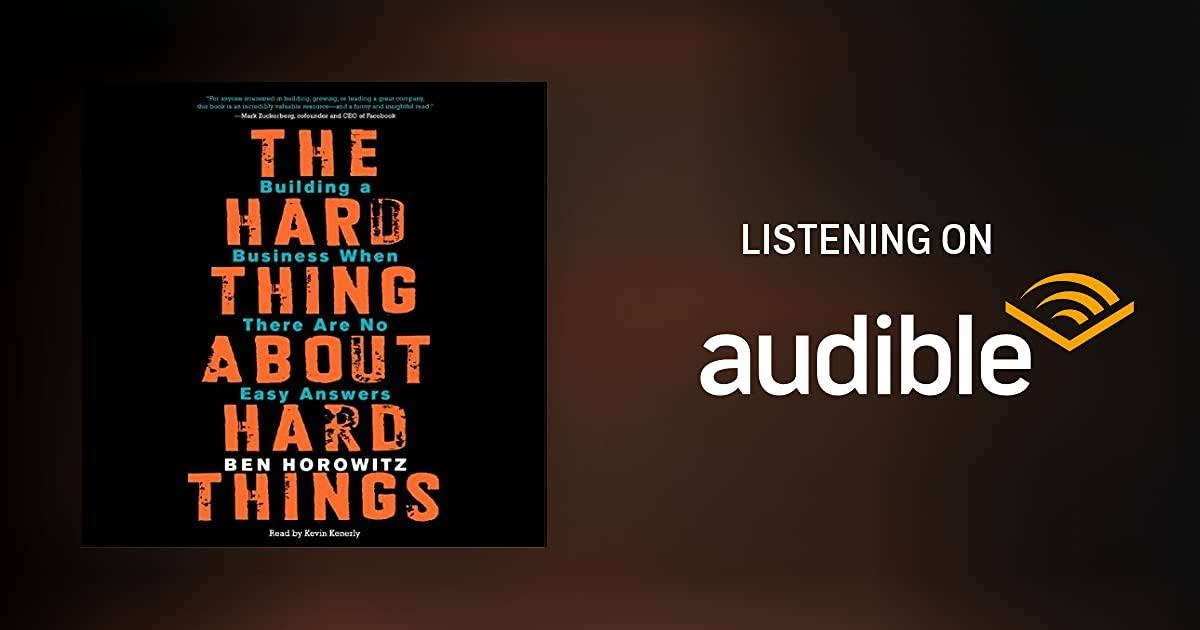
Libro: The Hard Thing About Hard Things
· 2 min read

alt text

Third time finishing this audiobook.

The first time was right out of college. The second was about a year later. And the third was just last week.

What struck me this time, and what I find pretty amazing, is how much my perspective toward the book has changed over the years.

The book itself stayed the same.

I didn't.

The first time I listened to it, a lot of the stories just sounded intense, impressive, and maybe even a little distant from where I was in life. Years later, some of the same parts started to make more sense because I had gone through more work, more uncertainty, more bad decisions, more pressure, and more moments where there really wasn't an obvious answer.

I think that's one of the best things about revisiting a book like this. Sometimes you don't really "outgrow" it. You just finally catch up to parts of it.

Best takeaway?

Ask the really good questions.

And how do you learn to ask really good questions?

By asking a lot of bad ones first.

By being wrong.

By missing things.

By asking something obvious.

By realizing afterward that you should've asked something else entirely.

Eventually, you get better at knowing which questions actually matter.

And yes, sometimes a whole shitload of courage really can clear paths and move mountains.
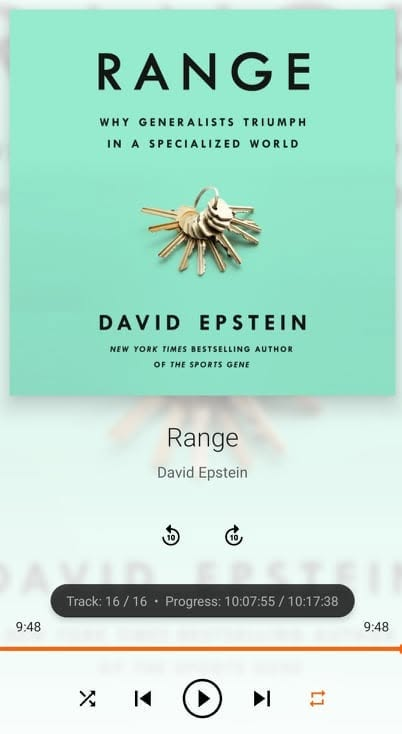
Libro: Range

· 2 min read

"Great things are not done by impulse, but by a series of small things brought together."

  • Vincent van Gogh

To be a generalist or a specialist?

I used to think you eventually had to pick one.

But after reading Range by David Epstein, I think the more interesting answer is that maybe you don't have to rush into choosing at all.

Explore different domains.

Be curious about things outside your usual lane.

Try something, leave it, come back to it years later, and sometimes you'll be surprised by how useful those seemingly unrelated experiences become.

And when you do find something that really catches your interest, go deep.

Learn the stack.

Understand how things work underneath.

Get good enough at it that you can actually build, break, fix, and explain things.

But you also don't have to spend your entire life with your foot pressed against the gas.

Sometimes you can slow down.

Coast for a while.

Look around.

Try something else.

Then come back with a different perspective.

Maybe being a generalist and being a specialist aren't really opposites. You can explore broadly while still developing depth in the things that matter to you.

And as the world around you changes, some of what you know will become useful, some will become outdated, and some things you'll have to rethink completely.

Learn.

Unlearn.

Then learn again.

alt text

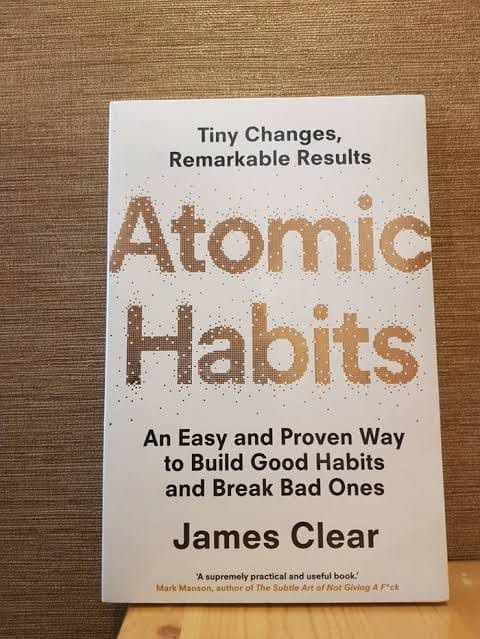
Libro: Atomic Habits

· One min read

Book 45 of 100

“Goals don’t differentiate people because, as you can see, winners and losers often have the same goals. The real question is: who will push through and rise to the occasion?”

alt text

I actually finished this last October, but with everything that happened during the last two months of 2019, I only managed to reach half of my target of 100 books for the year.

Still, it feels good to be back.

Time to plant some new seeds of habit for 2020.

“When you can’t win by being better, win by being different.”

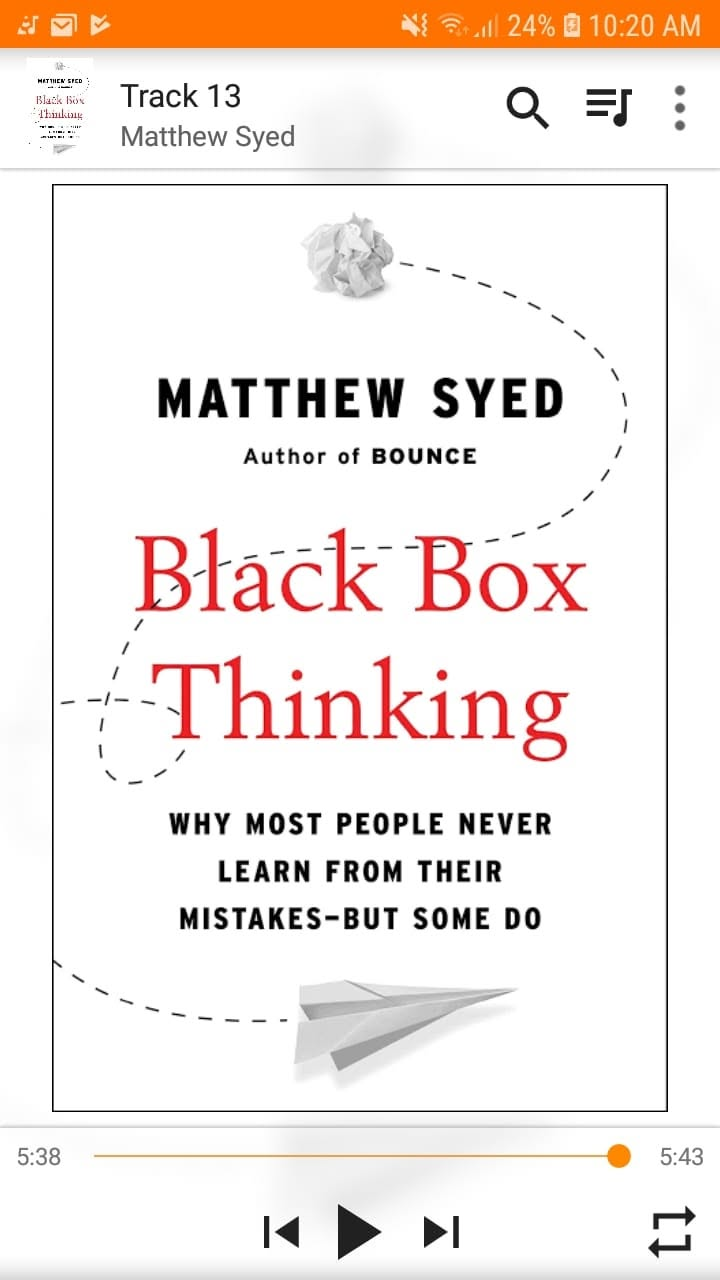
Libro: The Black Box of Thinking

· 2 min read

Book 19 of 100.

alt text

Main Takeaways:

  1. It’s very easy to sit back and come up with grand theories about how to change the world, but more often than not, our intuitions are wrong.

  2. Most of the time, we’re so worried about messing up that we never even get onto the field and try.

  3. Ultimately, we have to remember that success is only the tip of the iceberg. Beneath the surface, outside our view and often outside our awareness, is a mountain of necessary failures that came before it.

I know there are a lot more ideas laid out in the case studies throughout this book, but these three were the ones that really stuck with me.

They were also the only ones I actually managed to write down while listening halfway through. Haha.

As the book puts it, the world is far too complex to be figured out from your armchair.

Go out.

Test your ideas.

Be wrong. Learn. Fail again. Try again.

And maybe, after you’ve tried everything humanly possible, there comes a point when you can finally say:

“This time, I know it’s right.”

So yeah.

Learn from your own mistakes, but learn from other people’s mistakes too.

As Levenson puts it:

“Learn from the mistakes of others. You can’t possibly live long enough to make them all yourself.”

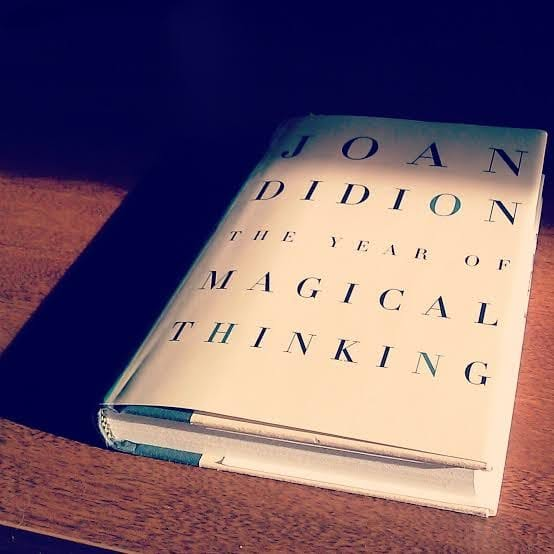
Libro: The Year of Magical Thinking

· One min read

Book 15 of 100

“Grief turns out to be a place none of us know until we reach it.”

alt text

Damn. Such a depressing read.

It’s about losing someone and what that loss does to the people left behind. And even while reading through all of that grief, I still found myself hoping there would be some sort of silver lining waiting on the very last page.

There really wasn’t.

But there’s still so much courage contained between its covers.

Maybe not the kind that magically makes everything better, but the kind that lets you keep going even when things won’t ever be the same again.

Cry.

Accept.

Move forward.

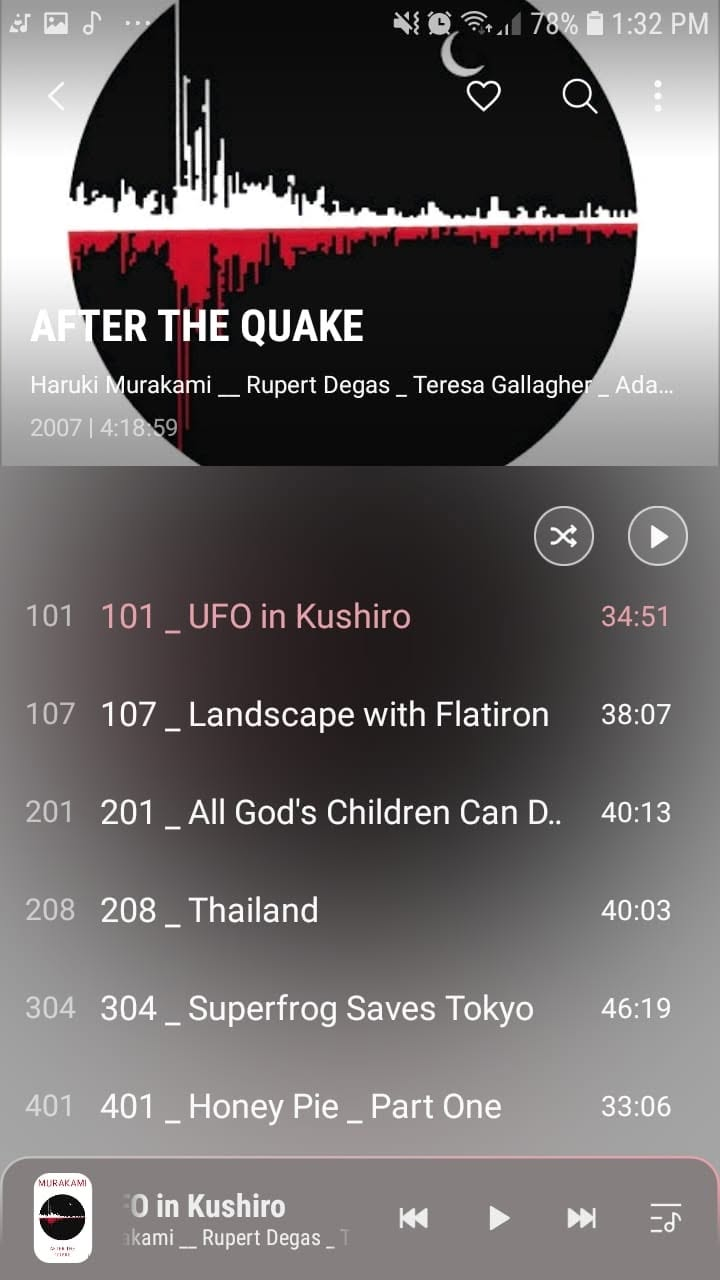
Libro: After the Quake

· 2 min read

After the Quake by Haruki Murakami

Book 13 of 100

“I want to write about people who dream and wait for the night to end; who long for the light so they can hold on to the ones they love.”

alt text

And that pretty much ends my journey through Murakami’s works.

There are still a few of his books that I haven’t downloaded or listened to, but after going through this many, I feel like I’ve gotten a pretty good sense of the man behind the stories.

A few observations:

  1. He likes to smoke.
  2. He likes pussies. Cats, I mean. Cats. His protagonists almost always seem to have one, lose one, look for one, or know someone who has one.
  3. He has clearly lived enough life to have a ridiculous amount of strange material to pull from.

His style definitely isn’t the conventional kind most of us are used to.

There isn’t always a captivating plot pushing you from one chapter to the next. Not every “why” gets answered. Loose ends don’t always get tied neatly together, and sometimes entire storylines seem to appear, intersect with everything else, and then disappear without giving you the closure you were expecting.

And yes, that can be frustrating.

But I think that’s also part of what makes his stories interesting.

Murakami leaves a lot of space for the reader to decide what things mean, how they see the characters, and whether any of those strange little experiences actually mattered at all.

And when you think about it, real life works a little like that too.

Not everything that happens to us has some grand meaning.

A lot of it is just noise.

Random encounters. Strange conversations. People who disappear from our lives. Things we worried about for weeks that eventually meant absolutely nothing.

Most of what we experience probably ends up becoming small trivialities somewhere in the larger story.

So maybe the choice is whether we spend our lives obsessing over every little thing that didn’t make sense, or simply accept that not everything needs an explanation and keep moving.

You can’t always decide where the current flows.

But you can decide what to pack into your ship.

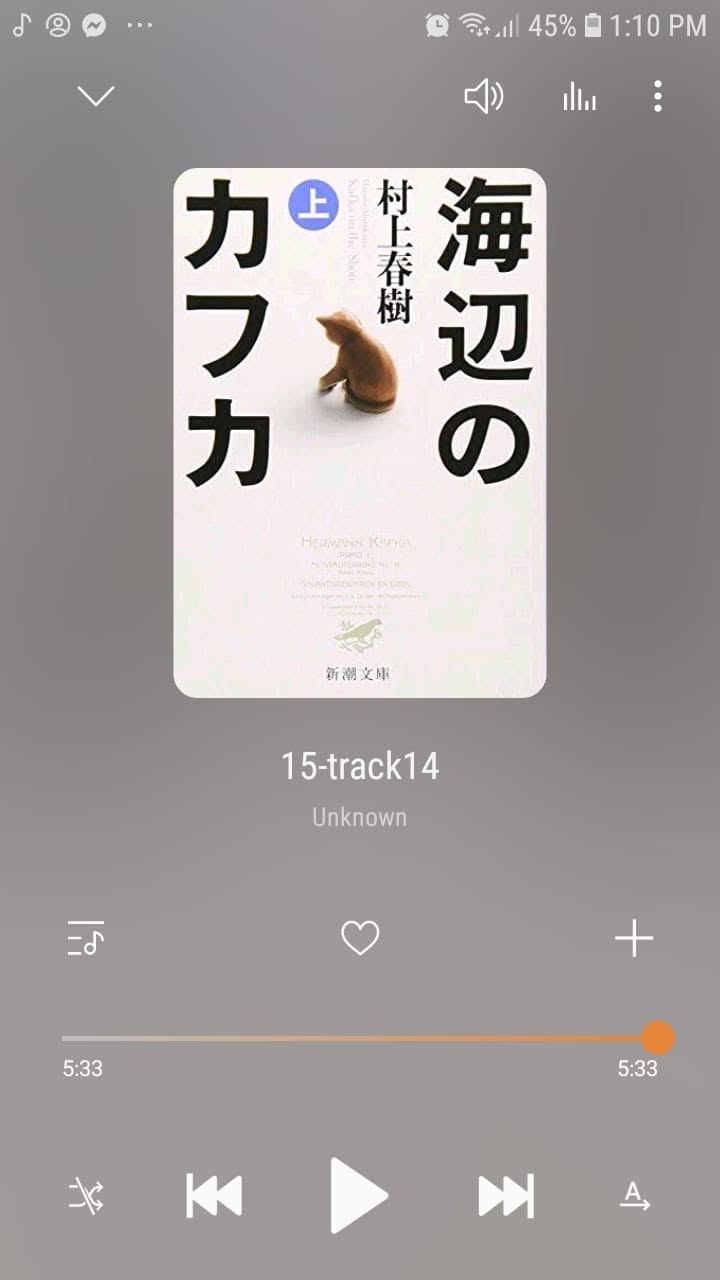
Libro: Kafka on the Shore

· 2 min read

Kafka on the Shore by Haruki Murakami

Book 12 of 100

“If you remember me, I don’t care if everyone else forgets.”

alt text

Damn. Such an inconclusive ending.

There were so many moments in this book where I kept waiting for everything to finally connect, like there had to be one neat explanation tying all the strange events together.

And then Murakami basically said, nope.

You get dreams, memories, talking cats, strange coincidences, metaphors that may or may not be metaphors, and people drifting in and out of each other’s lives.

Then the book ends and you’re just left sitting there thinking:

Wait. That’s it?

But weirdly enough, that’s probably why it lingers.

Not because everything was explained, but because it wasn’t.

There are still things I keep thinking about even after finishing it, but the one that really stayed with me was:

Whatever happened to Hoshino after the cat answered him?

Did something actually change?

Was it just another strange encounter?

Or was that simply Murakami’s way of reminding us that not everything needs to be wrapped up neatly before the story moves on?

I honestly don’t know.

And maybe that’s the point.

Some stories end.

Some just stop.

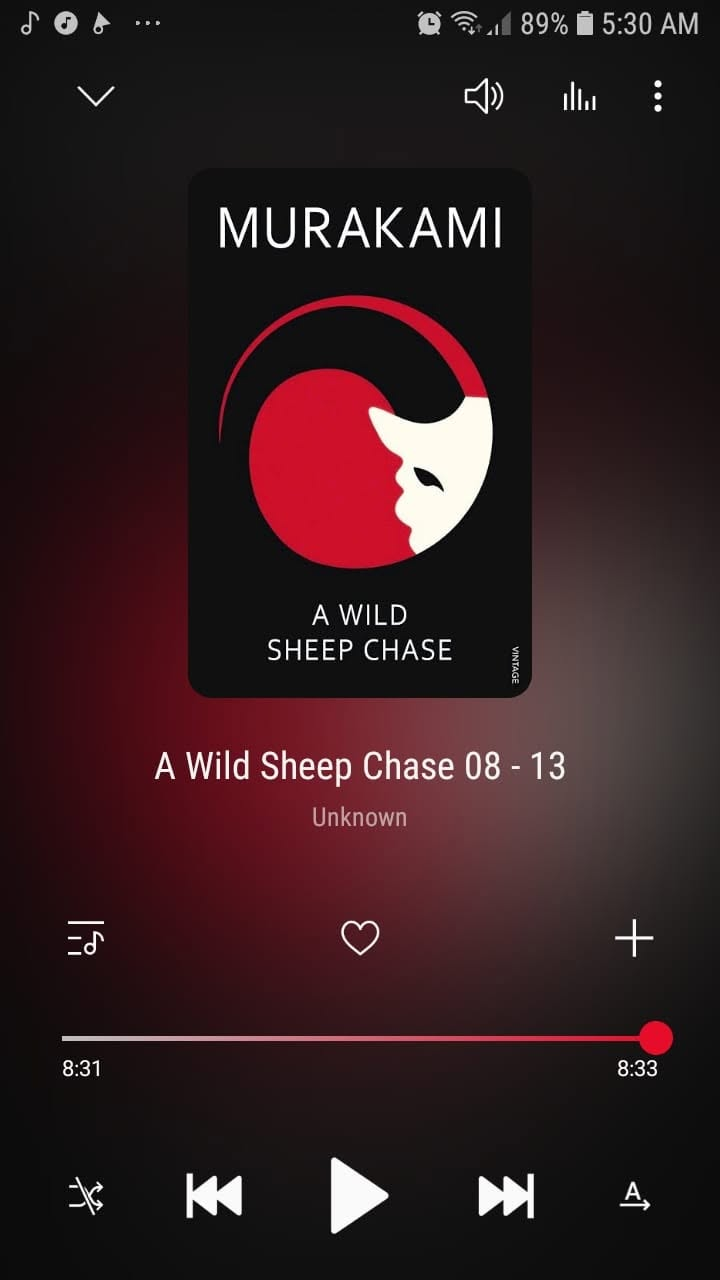
Libro: A Wild Sheep Chase

· One min read

A Wild Sheep Chase by Haruki Murakami

Book 11 of 100

“The light of the morning decomposes everything.”

alt text

Going through Murakami’s works sometimes feels like going through one long, vivid dream.

You have a nameless character looking for something almost mythical, strange people appearing at the right or wrong moments, and scattered details that seem important while you’re in the middle of the story but don’t necessarily tie themselves up neatly by the end.

And somehow, you just go with it.

You keep following the character deeper into this strange world because you feel like everything has to lead somewhere.

Then the book ends.

You wake up.

For a few moments, you can still remember the fantasy clearly, the places, the people, the strange little details.

Then they slowly start to fade.

And all you’re left with is that lingering feeling that something happened, something probably meant something, but you can’t quite explain what.

Then you wonder: What the hell was that all about?

And weirdly enough, that might be part of the charm.

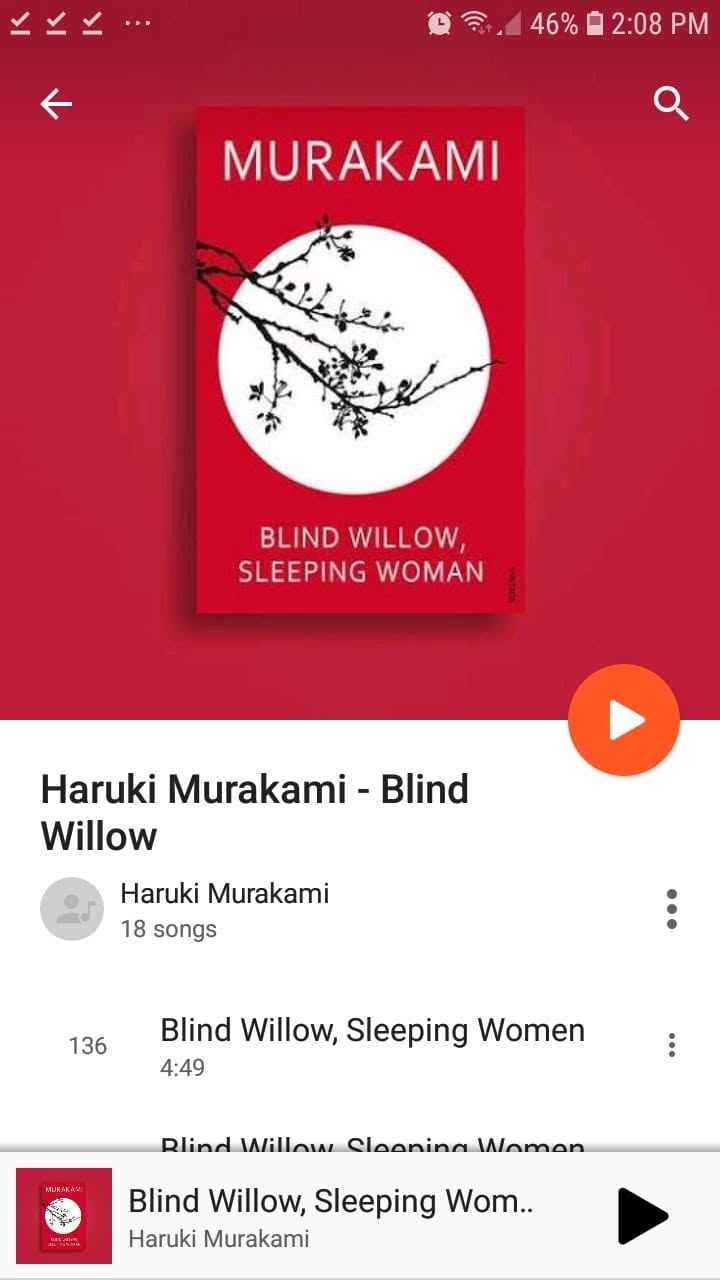
Libro: The Blind Willow, Sleeping Woman

· One min read

Blind Willow, Sleeping Woman by Haruki Murakami

Book 9 of 100

“Ordinary imperfect people always choose similarly imperfect people as friends.”

alt text

A strange mix of the ordinary, the different, and the surreal.

Since this is a collection of short stories, every few pages feels like stepping into a completely different little world. Some stories feel grounded and familiar, while others slowly drift into something weird, dreamlike, or slightly unsettling.

And somehow, that seems to be where Murakami is most comfortable.

You meet ordinary people dealing with loneliness, relationships, memories, strange encounters, and sometimes things that don’t really make sense at all.

Some stories left me thinking.

Some left me confused.

And some just ended before I could even figure out what exactly I was supposed to feel.

But I guess that’s part of the charm.

Ganbatte, Murakami-san!

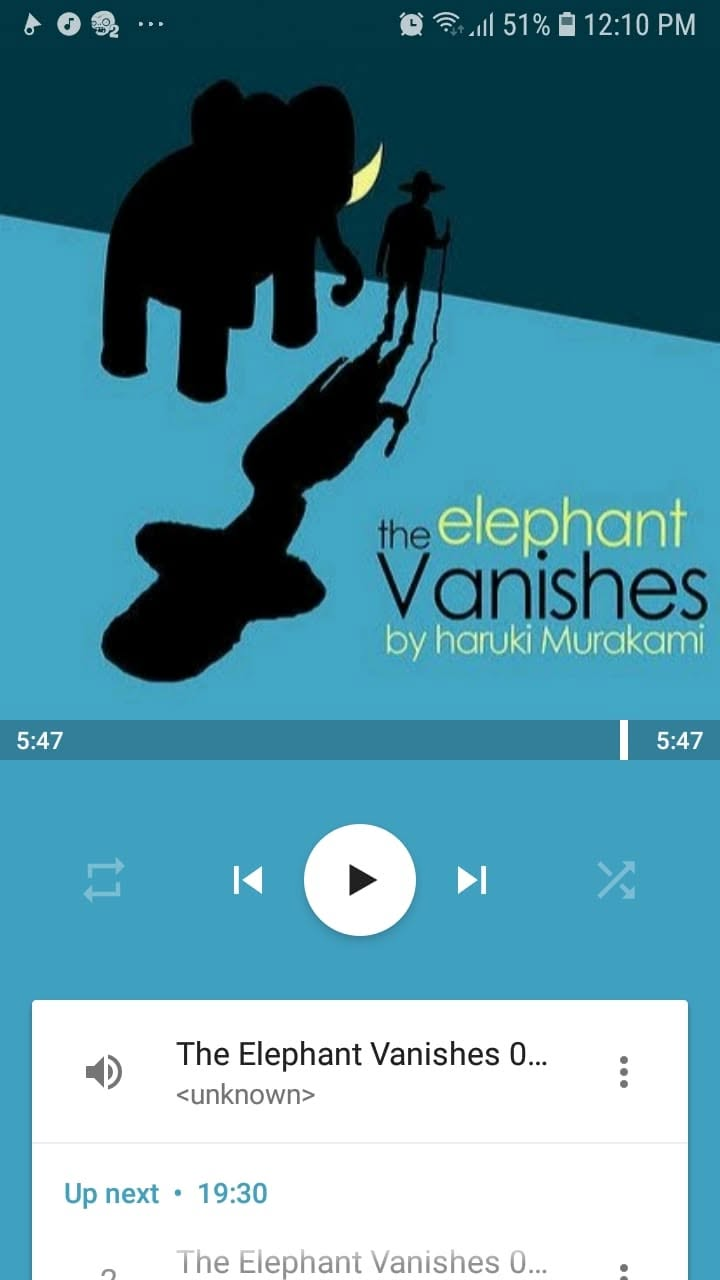
Libro: The Elephant Vanishes

· 2 min read

The Elephant Vanishes by Haruki Murakami

Book 8 of 100

“People who go through heavy experiences like that are changed men. They change for the better or they change for the worse. On the good side, they become unshakeable.”

alt text

Damn. Going through Murakami’s books sometimes feels a lot like going through life itself.

There are parts you enjoy immediately, and then there are parts that feel completely irrelevant while you’re in the middle of them. With The Elephant Vanishes, I honestly didn’t start appreciating some of the stories until I was already near the end.

And yeah, I guess that’s pretty much how life works too.

You grow up and encounter all sorts of trivial things that don’t seem to matter at the time.

You meet people once and never see them again.

You get tired.

You lose sleep.

You start carrying memories you wish you could forget.

And, apparently, if you’re living inside a Murakami story, you might also dance with dwarfs or hear someone banging on your window.

You’ll have to read The Elephant Vanishes for that one.

A lot of these moments can feel disconnected. Some of them might not even seem important when they happen.

But eventually, when you reach that last mile and look back, you realize that maybe not everything needed to have an obvious purpose.

Some things simply became part of you.

The people.

The strange moments.

The mistakes.

The things that made sense and the ones that absolutely didn’t.

Separate pieces at the time.

Part of the whole when you look back.

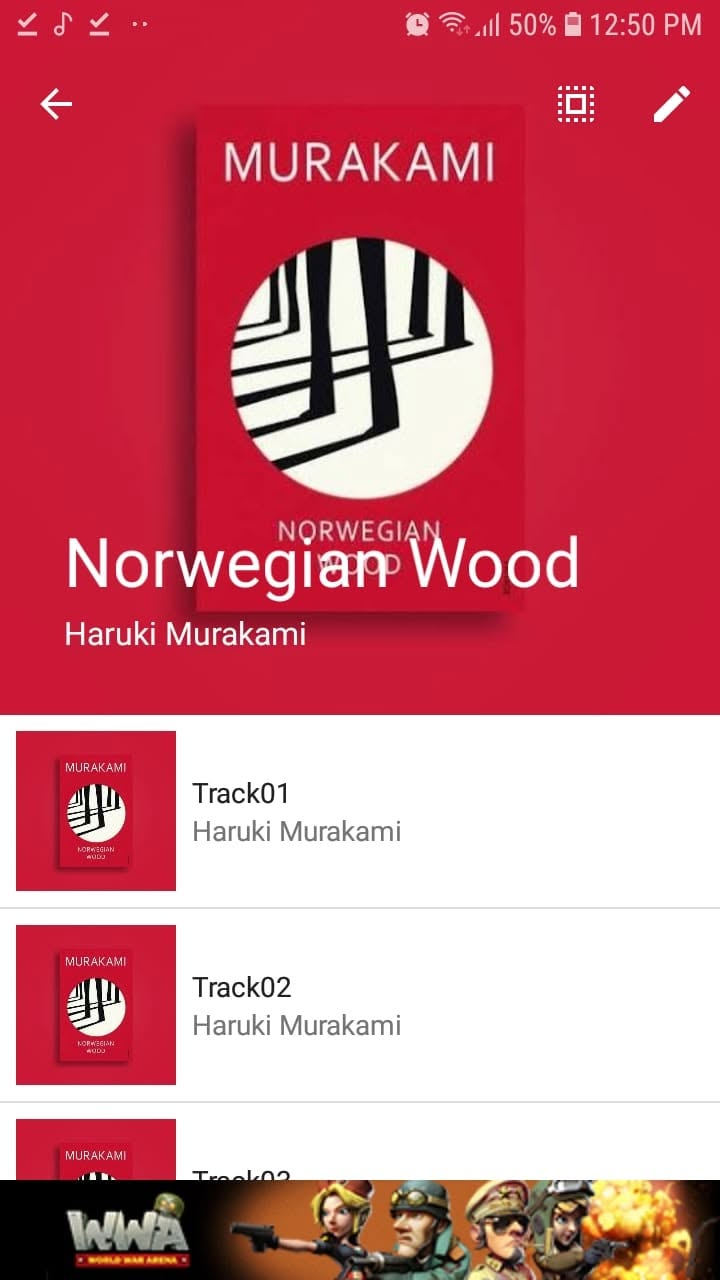
Libro: Norwegian Wood

· One min read

Norwegian Wood by Haruki Murakami

Book 7 of 100

“Love is the loss of innocence.”

alt text

This one is definitely more than just a love story.

It’s about loss, loneliness, memory, and that strange feeling of trying to understand why certain people or experiences had to happen the way they did.

Sometimes a loss feels like it should be teaching you something.

Like there has to be some reason behind it.

Some explanation.

Some lesson you’re supposed to carry with you.

But sometimes you just don’t understand it.

And maybe you won’t for a long time.

You just keep living, keep growing, and somehow learn to carry the things you never really got answers for.

That’s what stayed with me most about this one.

And yeah, there’s also a Japanese film adaptation of the book.

This is already my third Murakami book, and I think I’m starting to understand his particular style now.

Or at least, I think I am.

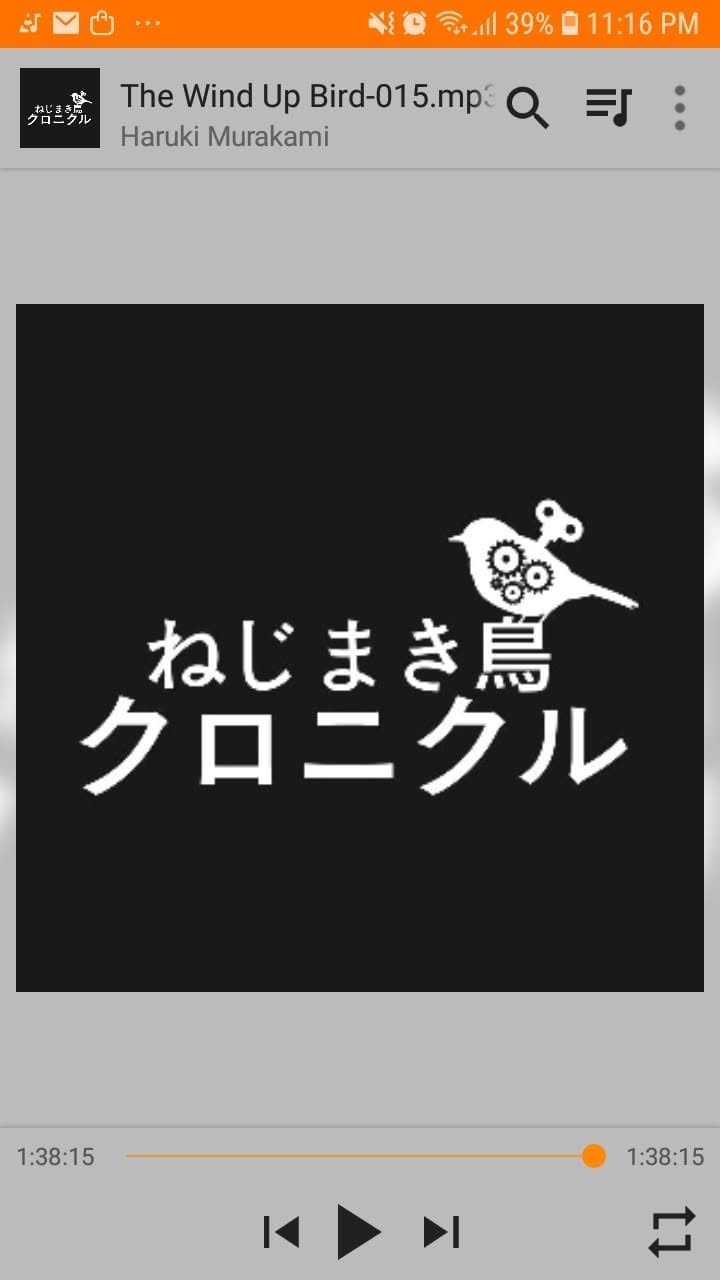
Libro: The Wind-Up Bird Chronicle

· 2 min read

The Wind-Up Bird Chronicle by Haruki Murakami

Book 6 of 100

“A person’s destiny is something you look back at after it has passed, not something you see in advance.”

alt text

This one is honestly difficult to describe because of the way the story unfolds.

It starts off relatively grounded, but somewhere along the way, things become stranger, darker, and more disconnected.

And midway through, you start asking yourself:

Where the hell is this story actually going?

Characters appear with their own histories. Strange events happen without much explanation. Different timelines, memories, dreams, and realities start overlapping until you’re not even completely sure which parts are supposed to connect.

Still, I couldn’t shake the feeling that some of these characters belonged to an even bigger world, like maybe pieces of their stories were hiding somewhere in Murakami’s other books.

Maybe they are.

Maybe they aren’t.

At this point, I’m starting to accept that Murakami probably isn’t going to explain everything to me anyway.

But if there’s one book so far that feels like an entire maze of complicated, interconnected stories packed between two covers, this is definitely it.

You keep following the turns, hoping everything will eventually make sense.

Then somehow, even when it doesn’t completely, you still find yourself thinking about it afterward.

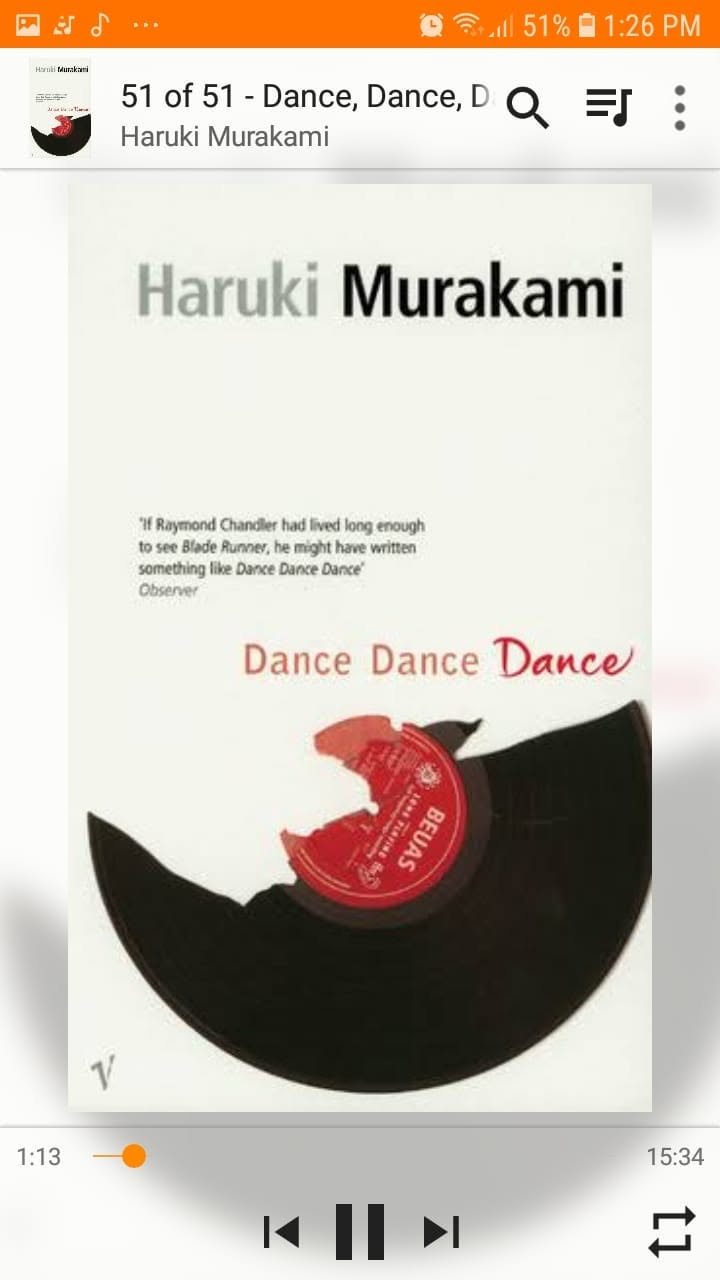
Libro: Dance, Dance, Dance

· One min read

Dance, Dance, Dance by Haruki Murakami

Book 5 of 100

“Time solves most things. And what time can’t solve, you solve for yourself.”

alt text

Dansu, dansu, dansu.

A story about losing people, searching for meaning, and somehow continuing even when you’re not completely sure where life is taking you.

People disappear.

Relationships change.

Some things never get properly explained.

And yet, life keeps playing its music.

Maybe that’s the point.

You don’t always get to choose the song. You don’t always understand the rhythm, and sometimes you completely lose the beat.

But you keep moving anyway.

One step after another.

With every beat that life plays, all you really have to do is dance.

Dance, dance, dance.