GCP Overview
Overview
Google Cloud Platform (GCP) is one of the oldest and biggest cloud services available. It has some unique strengths that make it different from others.
- Global reach
- Strong open-source support
GCP uses the same powerful backbone as Google Search and YouTube, which gives businesses speed, reliability, and flexibility. Many tech giants offer cloud services, but GCP has special advantages.
- Large global network
- Strong focus on collaboration
Google owns one of the largest fiber networks in the world, and its open-source focus helps businesses cut costs while innovating faster.
Global Infrastructure
Google Cloud runs on a private global network that connects regions, zones, and edge locations.
| Component | Scope | Primary Purpose | Typical Design Use |
|---|---|---|---|
| Region | Large geographic area | Disaster recovery and sovereignty boundaries | Multi-region architecture for critical systems |
| Zone | Isolated area inside a region | High availability inside one geographic boundary | Multi-zone deployment for production apps |
| Edge location | Network ingress point | Faster user access and content delivery | Cloud CDN and low-latency global access |
Regions
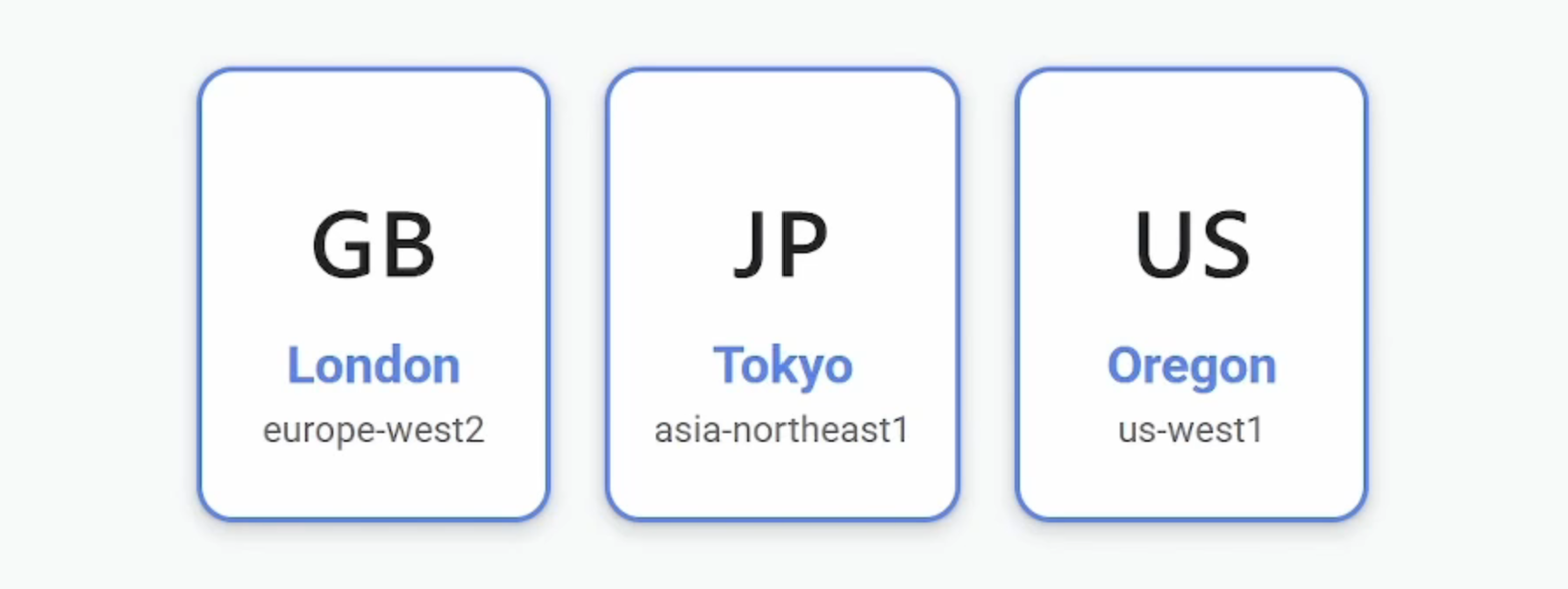
A region is an independent geographic area where Google operates cloud infrastructure.
- Supports disaster recovery planning
- Isolates major failures by geography
- Helps meet compliance and data residency needs
If one region has a major outage, resources in another region continue to run.
Zones
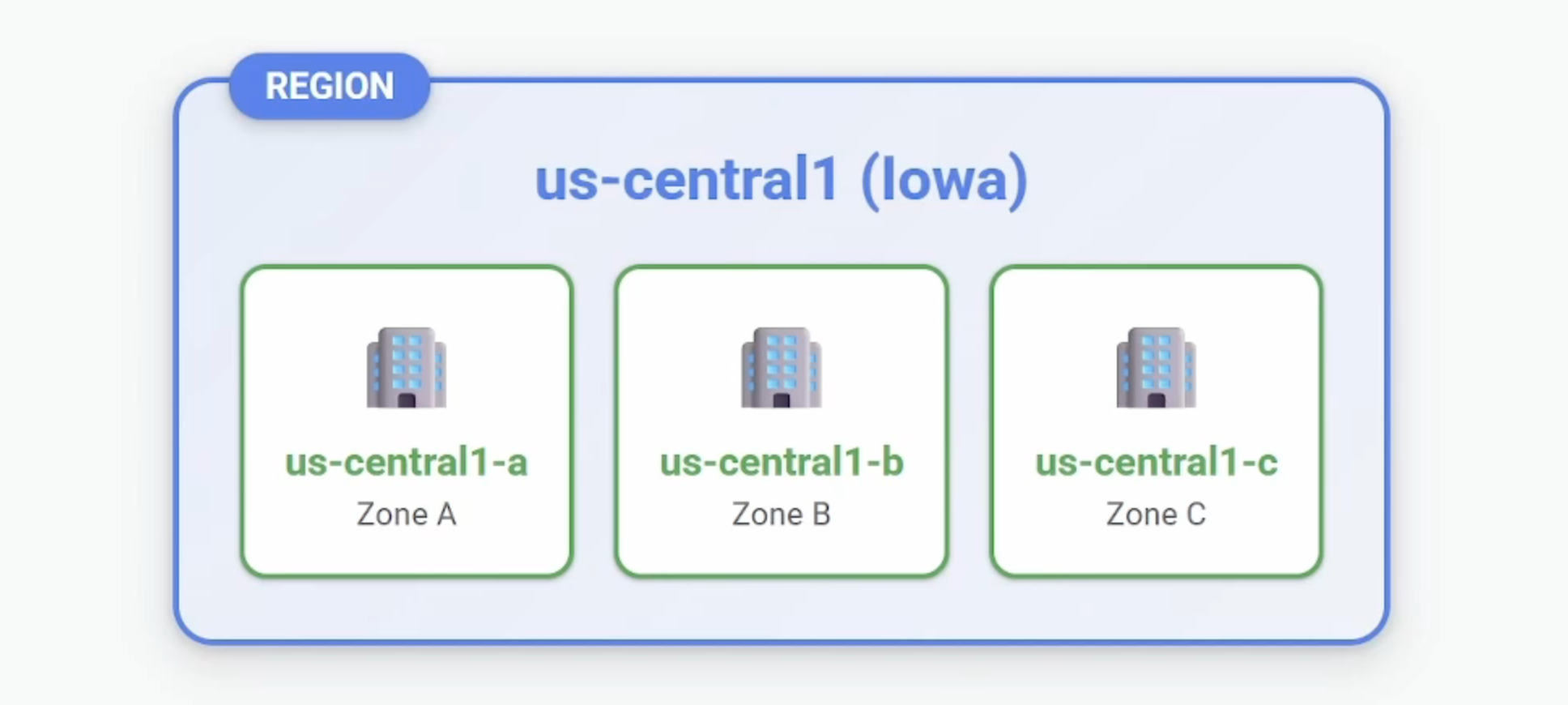
A zone is an isolated deployment area inside a region.
- Uses separate power, cooling, and networking
- Provides low-latency links between zones in the same region
- Reduces single data center failure risk
Deploying across multiple zones in one region is a common high-availability baseline.
Edge Locations and PoPs
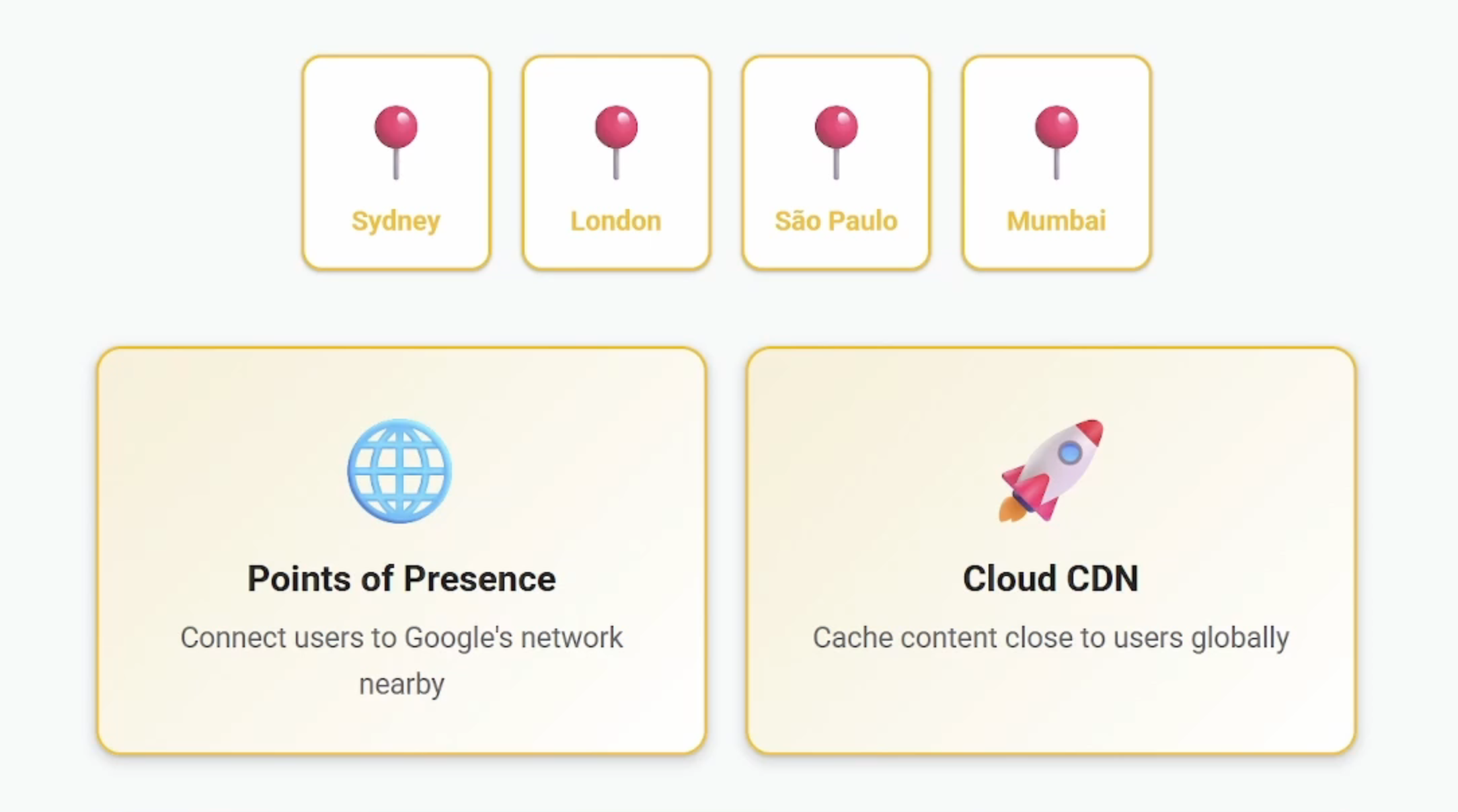
Edge locations, also called points of presence, are the nearest entry points to Google Cloud for users.
- Brings user traffic onto Google's private network sooner
- Supports content delivery through Cloud CDN
- Lowers round-trip latency for global users
For example, a user in Sydney can receive cached content from a nearby edge location instead of a distant region.
Design Patterns
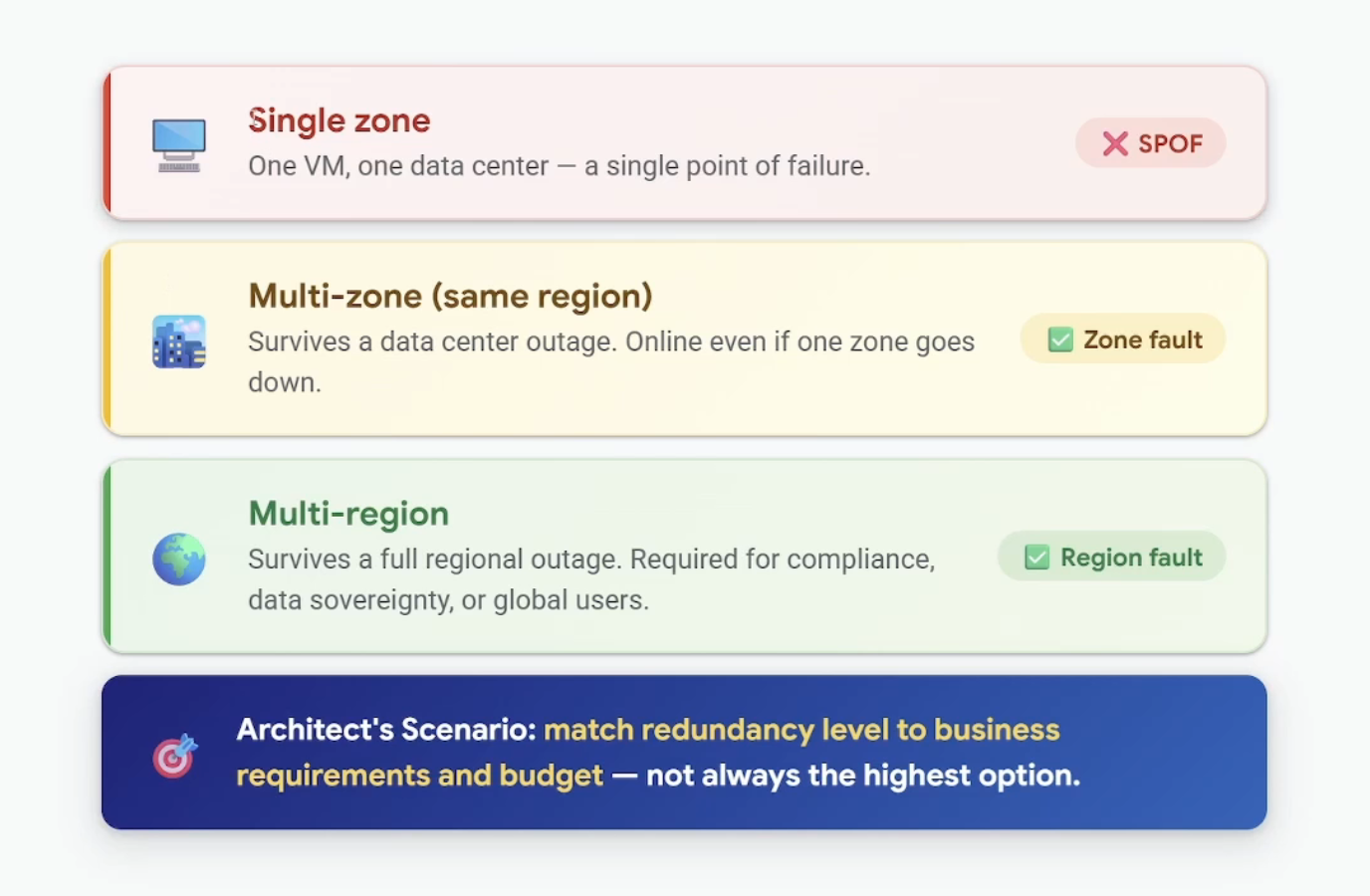
Use the redundancy level that matches business risk and budget.
Start with multi-zone for most production workloads, and add multi-region when recovery objectives, regulations, or global user distribution require it.
Note: A budget alert notifies you about spend, but it does not automatically stop resource usage.
Core Components
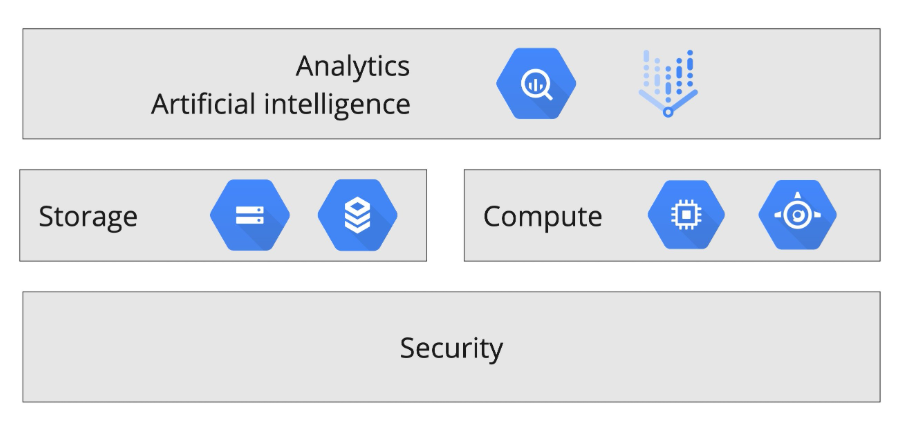
Every cloud platform is built on storage and compute. GCP offers key services for both.
- Cloud Storage for files and objects
- Cloud SQL for relational databases
- Compute Engine for virtual machines
- App Engine for web apps
- Vertex AI for building and running AI models
These services form the backbone of GCP and support everything else that runs on the platform.
A Secure Framework
GCP storage and compute services are designed with security in mind.
- Strong encryption for all data
- Secure foundation for advanced services
This strong base ensures that higher-level services like analytics and AI run safely and smoothly.
Business Transformation
Using GCP, businesses can grow faster and safer.
- Rapid product launches
- Built-in strong security
With pay-as-you-go pricing, scaling is easy. Businesses also gain the same strong security as Gmail and Google Drive, including encryption and global data centers.