Coding and Content Generation
Overview
Local models can generate code, explain code, help with debugging, and create content, even when you do not have an internet connection.
While smaller local models may not be as capable as the latest cloud-based models, they are often good enough for many everyday tasks.
This makes local models a useful backup when internet access is unavailable or when privacy is important.
Using Local Models for Coding
Local models can assist with many common programming tasks.
- Generate code
- Explain code
- Debug problems
- Answer programming questions
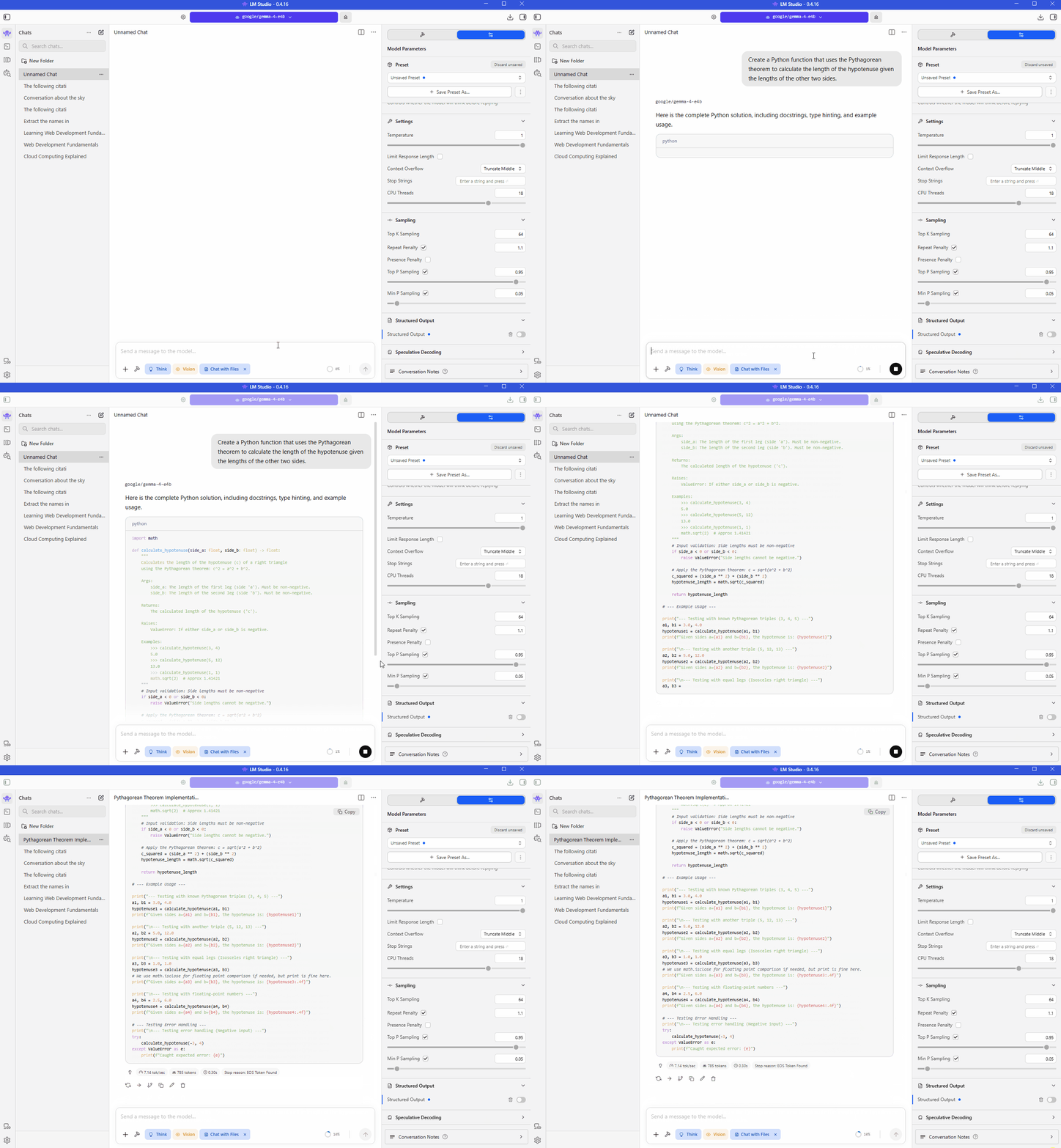
For example, you can ask a model to generate a Python function.
In the example below, the prompt asks the model to create a simple function.
Create a Python function that uses the Pythagorean theorem to calculate the length of the hypotenuse given the lengths of the other two sides.
The quality may not always match the most advanced cloud models, but the generated code is often useful and can save time.
Content Generation
Local models can also generate articles, posts, summaries, and other content.
- Generate blog posts
- Generate social media content
- Generate reports
- Adapt writing styles
Few-shot prompting means giving the model examples before asking it to perform a task.
- Provide examples
- Show the desired format
- Show the desired writing style
- Let the model learn from those examples
Instead of simply asking for content, you first show the model examples of what you want.
This helps the model produce more consistent results.
Example Without Examples
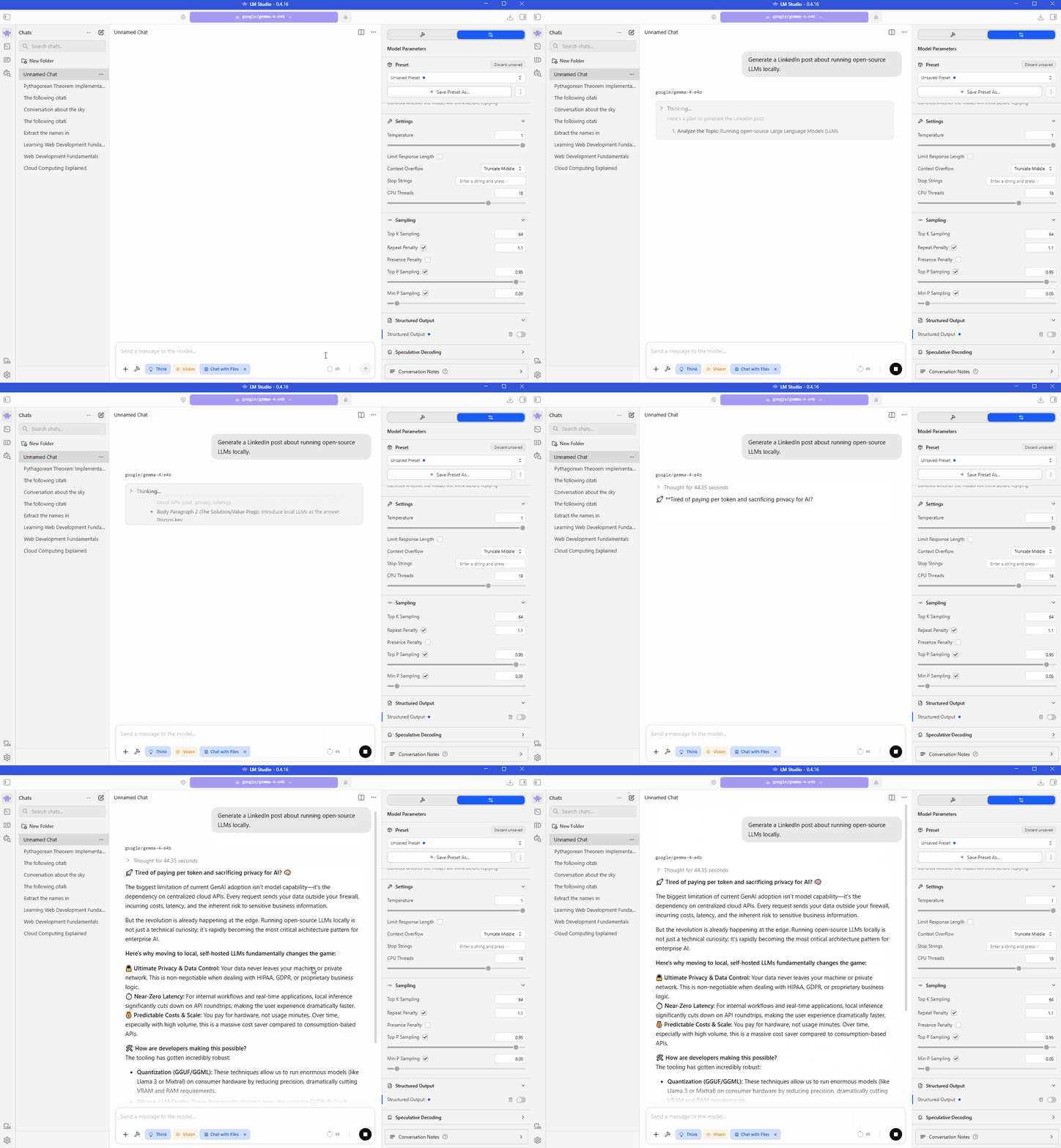
In the example below, the model receives only a simple instruction.
Generate a LinkedIn post about running open-source LLMs locally.
The output may be reasonable, but the writing style is entirely chosen by the model. This means that the result may contain styles, formatting, or emojis that you do not want.
Example With Few-Shot Prompting
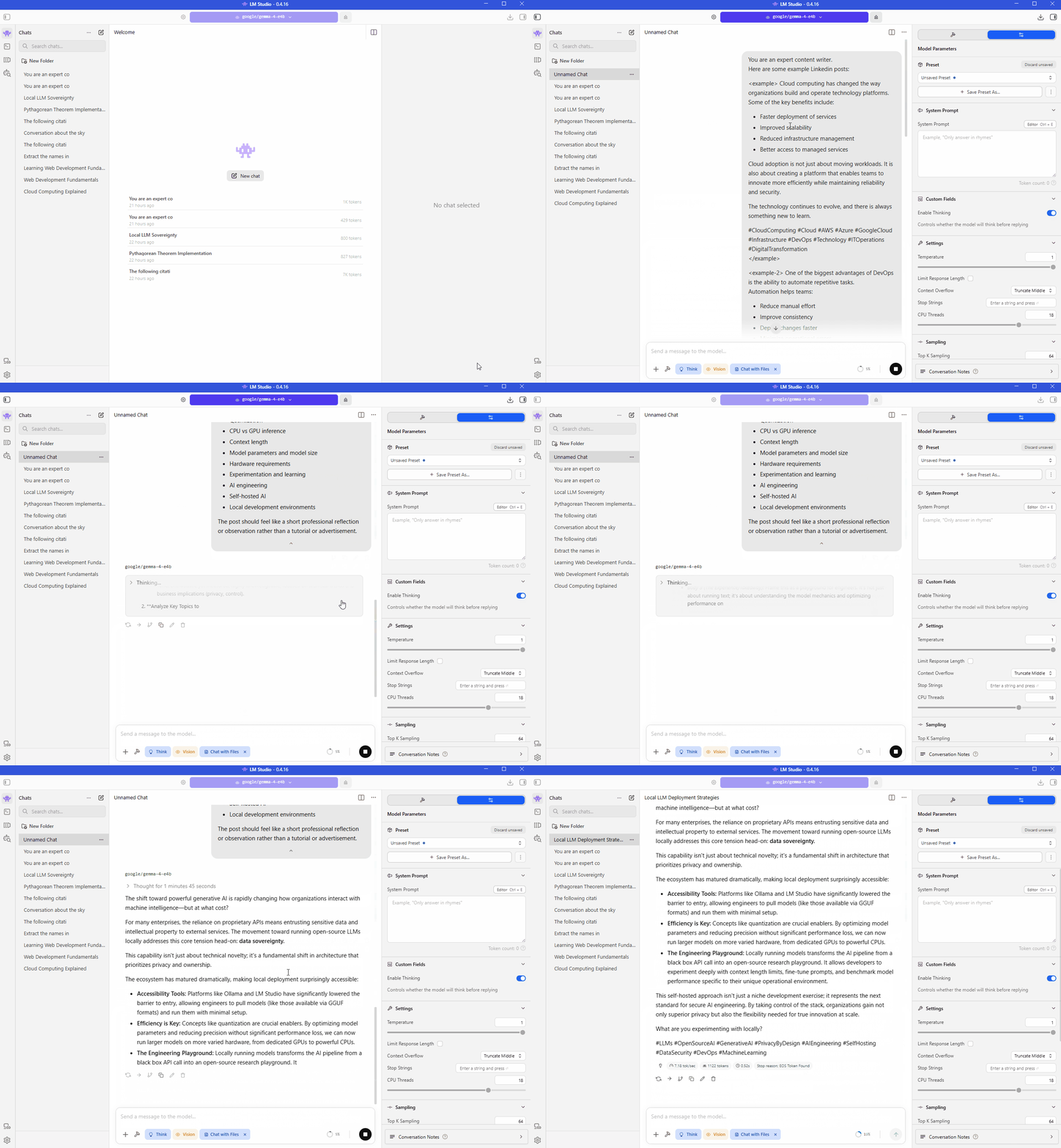
Here, the model receives example posts before generating a new one.
You are an expert content writer.
Here are some example Linkedin posts:
Cloud computing has changed the way organizations build and operate technology platforms.
Some of the key benefits include:
- Faster deployment of services
- Improved scalability
- Reduced infrastructure management
- Better access to managed services
Cloud adoption is not just about moving workloads. It is also about creating a platform that enables teams to innovate more efficiently while maintaining reliability and security.
The technology continues to evolve, and there is always something new to learn.
#CloudComputing #Cloud #AWS #Azure #GoogleCloud #Infrastructure #DevOps #Technology #ITOperations #DigitalTransformation
One of the biggest advantages of DevOps is the ability to automate repetitive tasks.
Automation helps teams:
- Reduce manual effort
- Improve consistency
- Deploy changes faster
- Minimize operational errors
Whether it is infrastructure provisioning, CI/CD pipelines, testing, or monitoring, automation allows engineers to spend less time on routine work and more time solving meaningful problems.
Small improvements in automation can often lead to significant gains in efficiency over time.
#DevOps #Automation #PlatformEngineering #CloudEngineering #InfrastructureAsCode #Terraform #CI_CD #GitOps #SRE #ContinuousImprovement
Generate a new post about running open-source LLMs locally using the same writing style. DO NOT use the content from the examples.
The post should cover some or all of the following topics:
- Running LLMs locally
- Privacy and data ownership
- Open-source AI
- LM Studio
- Ollama
- GGUF models
- Quantization
- CPU vs GPU inference
- Context length
- Model parameters and model size
- Hardware requirements
- Experimentation and learning
- AI engineering
- Self-hosted AI
- Local development environments
The post should feel like a short professional reflection or observation rather than a tutorial or advertisement.
The content changes, but the writing style now follows the examples.
Using Delimiters
Delimiters help separate different parts of a prompt.
- Separate instructions and examples
- Reduce ambiguity
- Useful for longer prompts
For example:
<example>
Previous article here
</example>

<example>
Another article here
</example>
The model can more easily identify where examples begin and end.
This often improves the quality of longer prompts.