Using Jinja2 Templates to Deploy motd
Overview
This lab renders a Jinja2 template to deploy a managed /etc/motd file to target hosts.
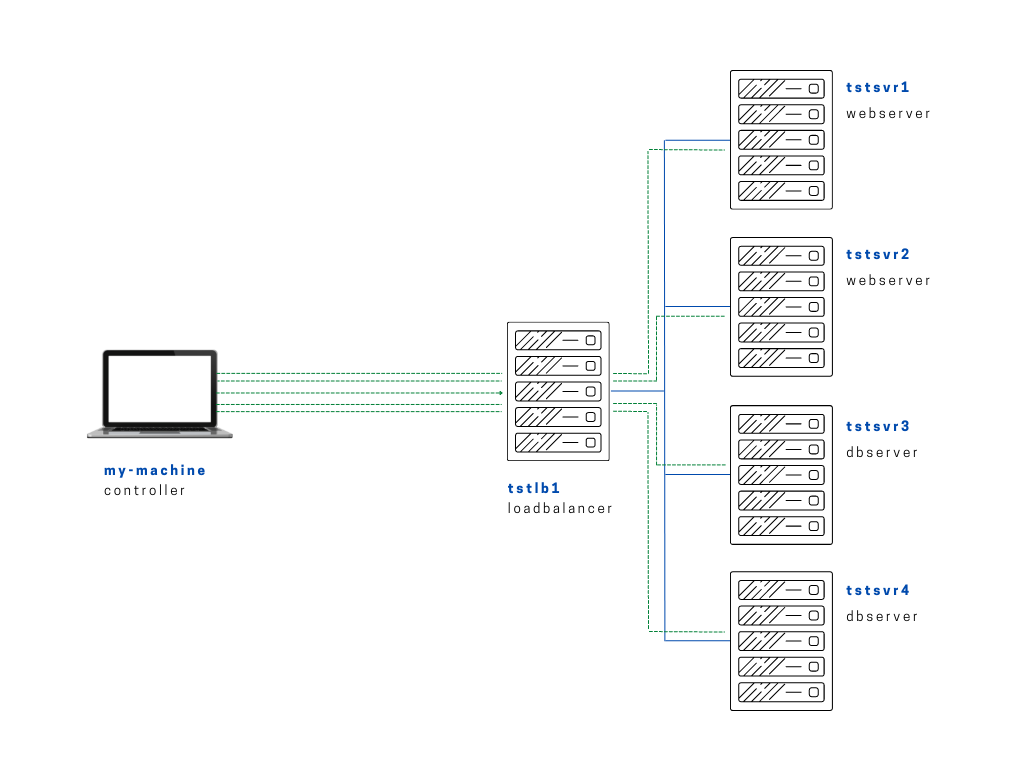
Diagram:
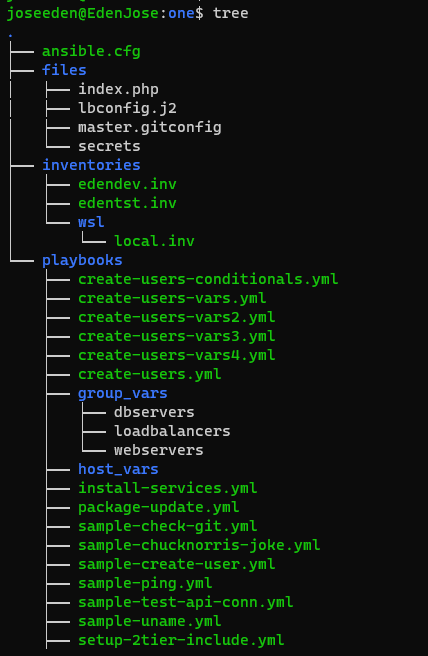
The tree-structure of our Project One currently looks like this. Don't worry if you see that there's already a lot of files in the directory. These are the files from the previous labs in this series. The only ones we'll really really need are also provided below.
Project One
ansible.cfg
 [defaults]
# E: variables for my personal lab
inventory = ~/proj-ansible-1/one/inventories/edendev.inv
remote_user = eden
private_key_file = ~/.ssh/id_rsa
host_key_checking = False
retry_files_enabled = False
timeout = 24
gather_facts = smart

#ansible_managed = "# This file is managed by Ansible, all local changes will be lost !"
#allow_world_readable_tmpfiles = True
#precedence = all_plugins_play, all_inventory, groups_plugins_play, groups_inventory, all_plugins_inventory, groups_plugins_inventory
#any_errors_fatal = True
#timeout = 24

[privilege_escalation]
#become_method = sudo
#become=True
#become_user=root
#become_ask_pass=False

[paramiko_connection]
#record_host_keys = False

[ssh_connection]
scp_if_ssh = True
pipelining = True
symlink in root directory pointing to projects folder
$ ls -la | grep "\->"
lrwxrwxrwx  1 joseeden joseeden    70 Jan 14 23:03 proj-ansible-1 -> /mnt/c/Users/Eden Jose/4-Projects
For this lab, we'll have two webservers and two dbservers. Recall that we used a default edendev.inv inventory file for the previous labs. We'll be using a different inventory file for this lab and instead of changing the ansible.cfg, we'll just specify this new inventory file when we run the playbook.
edentst.inv
# edentst.inv

[webservers]
app1    ansible_host=13.251.146.254
app2    ansible_host=122.248.203.239

[dbservers]
db1    ansible_host=52.76.189.254
db2    ansible_host=54.255.28.202

[loadbalancers]
lb1     ansible_host=13.228.99.157

[local]
localhost   ansible_connection=local
The goal of this lab is to create a custom banner that displays the FQDN of the servers. This means that each server will have a different message-of-the-day display when you login to them.
Instead of manually creating a file for each, we'll utilize Jinja 2 templating.
Our files/motd.j2 will look something like this:
files/motd.j2
{# motd.j2 #}
{# -------------------------------------------------------------------- #}
{# Lines enclosed with braces and pound-sign are considered comments #}
{# This means they are skipped when Jinja2 template is read #}
{# -------------------------------------------------------------------- #}

The hostname for this system is: {{ ansible_facts['fqdn'] }}
Next, we'll create an Ansible playbook that will deploy the Jinja2 template to the servers.
deploy-jinja2-motd.yml
# deploy-jinja2-motd.yml
#-----------------------------------------
---
- name: Deploy motd.j2 to the servers
  hosts: all:!localhost
  become: true
  tasks:
  - name: Deploy motd.j2 to the servers
    template:
      src: ../files/motd.j2
      dest: /etc/motd
      owner: root
      group: root
      mode: "0644"
To run the playbook,
$ ansible-playbook playbooks/deploy-jinja2-motd.yml -i inventories/edentst.inv
When we login to one of the servers, we realize that from the server's perspective, their FQDN is localhost. This is the same for the rest of the other servers.
$ ssh eden@tstsvr1

The hostname for this system is: localhost.localdomain
Last login: Sun Jan 16 15:29:25 2022 from 1.2.3.4
[eden@tstsvr1 ~]$
Let's modify our motd.j2 and use inventory_hotname this time.
files/motd.j2
{# motd.j2 #}
{# -------------------------------------------------------------------- #}
{# Lines enclosed with braces and pound-sign are considered comments #}
{# This means they are skipped when Jinja2 template is read #}
{# -------------------------------------------------------------------- #}

The hostname for this system is: {{ inventory_hostname }}]
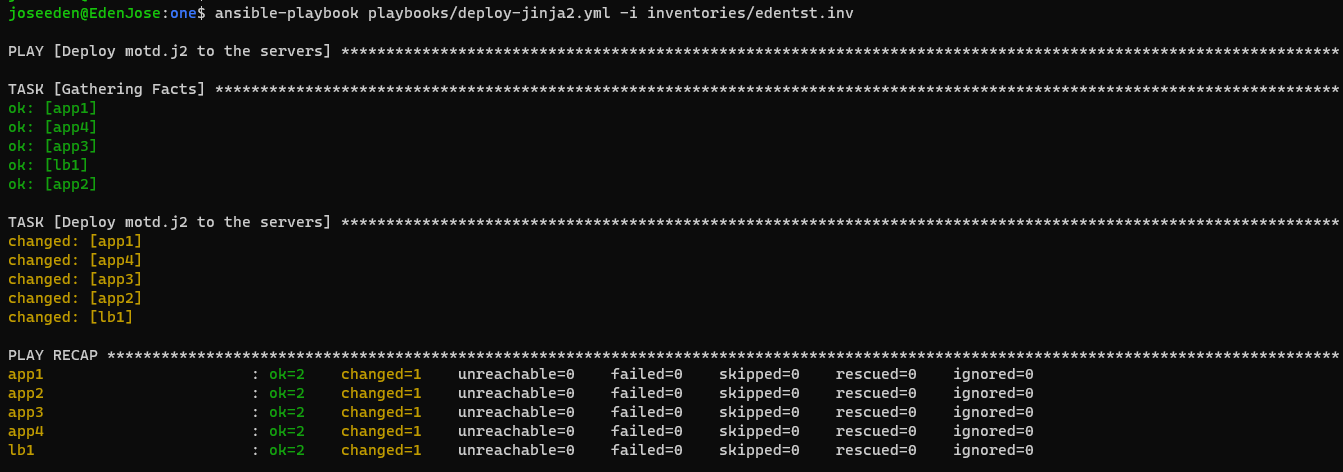
When we run the playbook once again and log in to one of the servers, we see that the motd correctly display the hostname of the servers.
$ ansible-playbook playbooks/deploy-jinja2-motd.yml -i inventories/edentst.inv
$ ssh eden@tstsvr1

The hostname for this system is: app1
Last login: Sun Jan 16 23:13:47 2022 from 1.2.3.4
[eden@tstsvr1 ~]$
Now that we've accomplish the goal, let's do other tests. Let's include the IP of the server in the motd.
files/motd.j2
{# motd.j2 #}
{# -------------------------------------------------------------------- #}
{# Lines enclosed with braces and pound-sign are considered comments #}
{# This means they are skipped when Jinja2 template is read #}
{# -------------------------------------------------------------------- #}

The hostname for this system is: {{ inventory_hostname }}:{{ ansible_facts["default_ipv4"]['address'] }}
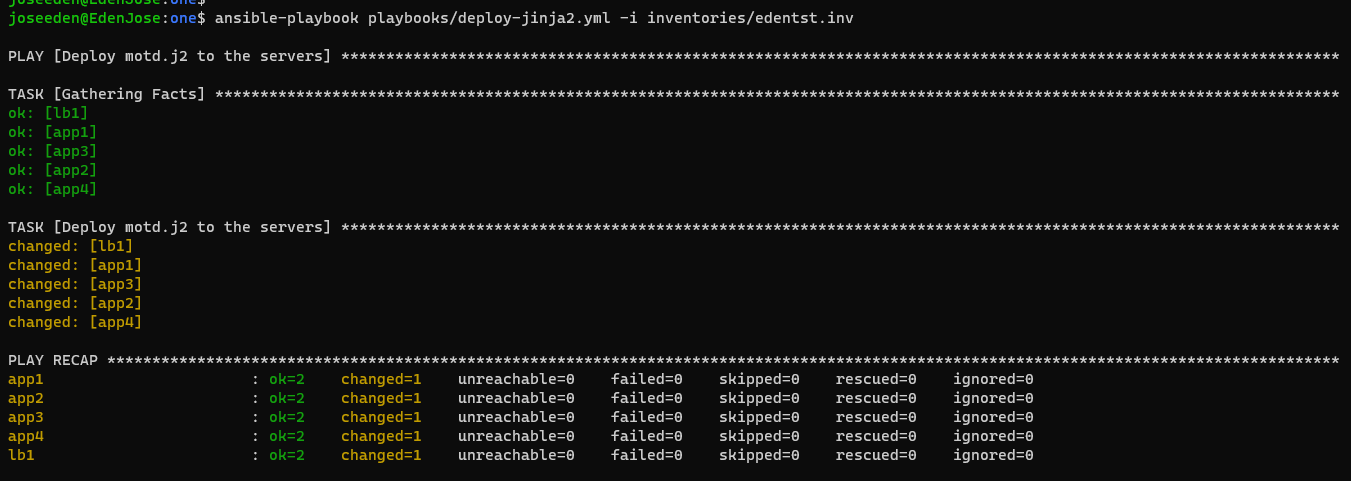
Running the playbook again, we see that there was something changed on the servers.
$ ssh eden@tstsvr1

The hostname for this system is: app1:172.31.2.181
Last login: Mon Jan 17 00:26:44 2022 from 1.2.3.4